
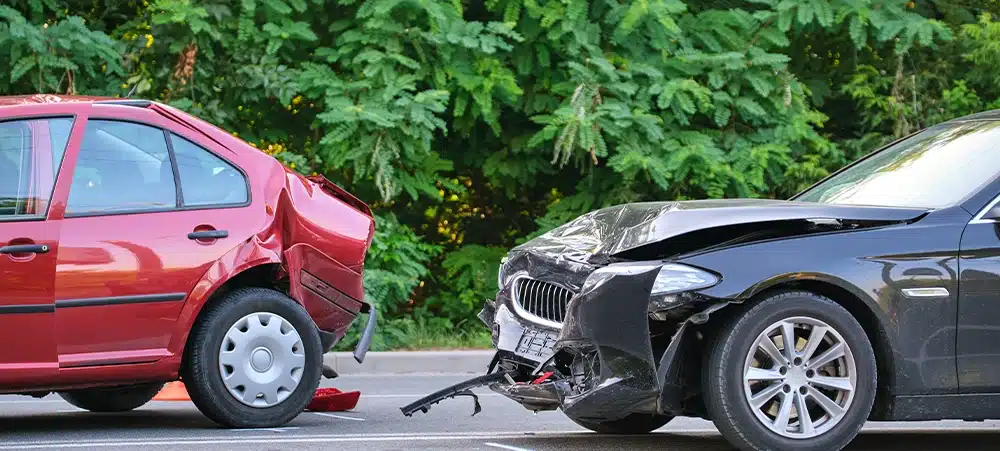
The force of impact throws you forward, then slams you back. Your neck snaps, your back wrenches, and in seconds, everything changes. A rear-end collision in Lubbock can happen anywhere—merging onto Loop 289, stopping at a light on 19th Street, or slowing for traffic on Marsha Sharp Freeway.
As an experienced Lubbock rear-end accident lawyer, I understand the chaos that follows. Medical bills pile up while insurance adjusters push for quick settlements. You’re dealing with pain that disrupts your sleep, work, and daily routine.
The driver who caused this may claim you stopped too suddenly or that damage looks minimal, making you question whether you have a valid claim.
I’ve stood beside Lubbock residents facing these exact challenges. I know Texas law, local insurance tactics, and what it takes to prove your case. When insurance companies see my name on your claim, they know I’m a rear-end accident attorney in Lubbock who is prepared for trial.
This changes everything about how they approach your case—and the compensation they’re willing to offer.
Rear-Ended in Lubbock? I’m Here to Help
Being hit from behind is one of the most jarring experiences you can face on the road. The sudden impact leaves you shaken, often injured, and facing a mountain of questions about what comes next.
I’m James Perrin, and I help injury victims across Texas pursue the compensation they deserve. As your Lubbock car accident lawyer, I handle every aspect of your case while you focus on healing. You work directly with me, not a paralegal or case manager, and you won’t pay any attorney fees unless I win your case.
My approach is simple: prepare every case as if it’s going to trial. This puts you in the strongest position possible, whether we settle or take your case to court.
Is the Rear Driver Always at Fault in Texas?
No, the rear driver isn’t automatically at fault, though they’re usually presumed responsible. Texas law assumes that drivers who hit someone from behind were following too closely or not paying attention. This presumption exists because every driver has a legal duty to maintain a safe following distance.
However, this presumption can be overcome when evidence shows the front driver acted negligently:
- Brake checking: The lead driver intentionally slams on their brakes to cause an accident.
- Faulty equipment: Broken brake lights or turn signals prevent the rear driver from seeing what’s happening.
- Sudden lane changes: A driver cuts in front of you without leaving enough space to stop safely.
- Reversing into traffic: Someone backs out of a parking space or driveway into your path.
Understanding fault matters because Texas follows comparative negligence rules. This means your compensation can be reduced if you’re found partially responsible for the crash under the comparative negligence rules.
What to Do Immediately After a Rear-End Crash in Lubbock
Your actions in the first few minutes after a crash can make or break your case. Here’s what you need to do right away:
Get medical help first. Call 911 even if you think you’re not seriously hurt. Many rear-end injuries like whiplash don’t show symptoms immediately. Emergency responders can also document the scene and create an official accident report.
Document everything thoroughly. Take photos of all vehicle damage, the accident scene, street signs, and any visible injuries. Get pictures from multiple angles and distances. If your phone was damaged, ask a witness to help.
Exchange information carefully. Get the other driver’s name, phone number, driver’s license number, and insurance details. Don’t discuss who was at fault or apologize for anything. Stick to basic facts about what happened.
Identify witnesses quickly. People leave accident scenes fast. Get contact information from anyone who saw what happened before they drive away.
Seek immediate medical attention. Go to UMC Health System, Covenant Medical Center, or your family doctor within 24 hours. Some injuries take time to develop, and waiting too long can hurt your case.
Contact a rear-end accident attorney. Don’t give recorded statements to insurance companies before talking to a lawyer. They’re trained to ask questions that can damage your claim.
Common Rear-End Collision Injuries and Their Symptoms
Rear-end crashes create unique injury patterns because of how your body moves during impact. Your torso is held in place by the seatbelt while your head snaps forward and backward. This creates significant forces on your neck, back, and brain.
Whiplash and Neck Injuries
Whiplash is the rapid back-and-forth motion of your head during a collision. This stretches and tears the muscles, tendons, and ligaments in your neck. Symptoms of whiplash and other injuries may not be immediately apparent after a crash.
Common whiplash symptoms include neck pain and stiffness, headaches, shoulder pain, dizziness, and fatigue. Some people also experience memory problems, difficulty concentrating, and mood changes.
Herniated Discs and Spinal Injuries
The force from a rear-end impact can compress your spine, causing discs to bulge, rupture, or herniate. A herniated disc occurs when the soft center of a spinal disc pushes through a crack in the tougher exterior casing.
This can cause severe back pain that radiates into your arms or legs. You might also experience numbness, tingling, or weakness in your extremities. These injuries often require extensive physical therapy, injections, or surgery.
Concussions and Traumatic Brain Injuries
Your brain can strike the inside of your skull during the sudden acceleration and deceleration of a rear-end crash. This can cause a concussion or more serious traumatic brain injury.
Brain injury symptoms can be subtle and include confusion, memory problems, difficulty concentrating, sensitivity to light and noise, sleep disturbances, and personality changes. These symptoms can last for months or become permanent.
How I Prove Fault in Rear-End Accident Cases
Proving fault requires more than just pointing out that someone hit you from behind. Insurance companies will look for any reason to reduce their payout, so I conduct a thorough investigation to build an ironclad case.
Phone Records and Distracted Driving Evidence
I can subpoena the at-fault driver’s cell phone records to determine if they were texting, calling, or using apps at the time of impact. Phone records show the exact time of calls and texts, which I can match against the accident time.
Distracted driving is a major factor in rear-end crashes. Drivers who are looking at their phones instead of the road ahead can’t react quickly enough to avoid collisions.
Vehicle Data Recorders and Crash Reconstruction
Modern vehicles contain Event Data Recorders (EDRs), also called “black boxes,” that capture crucial information about crashes. These devices record data like vehicle speed, brake application, steering input, and seatbelt usage in the seconds before and during impact.
I work with accident reconstruction experts who can download and analyze this data to show exactly what happened. This information often proves that the other driver was speeding, didn’t brake in time, or wasn’t paying attention.
Traffic Cameras and Witness Statements
I move quickly to secure footage from traffic cameras, nearby business security cameras, and dashcams from other vehicles. This evidence can disappear quickly, so time is critical.
Witness statements are equally important. I interview everyone who saw the crash to get their version of events. Independent witnesses often provide the most credible testimony about what really happened.
What Compensation Can You Recover After a Rear-End Collision?
Texas law allows you to recover damages for all the ways an accident has affected your life. I fight to ensure you receive full compensation for every loss, not just the obvious ones.
Medical Expenses and Future Treatment Costs
This includes all costs related to your medical care, from the ambulance ride to ongoing treatment. Emergency room visits, diagnostic tests, surgeries, physical therapy, prescription medications, and medical equipment all count as recoverable damages.
Future medical expenses are equally important. If you’ll need additional surgeries, long-term therapy, or ongoing treatment, I work with medical experts to calculate these costs and include them in your claim.
Lost Wages and Diminished Earning Capacity
You can recover wages lost from time missed at work due to your injuries. This includes sick days, vacation days, and unpaid time off. If you’re self-employed, I’ll document your lost business income.
More importantly, if your injuries prevent you from returning to your previous job or limit your future earning ability, you can recover compensation for this diminished earning capacity. This is often the largest component of serious injury cases.
Pain, Suffering, and Loss of Life Enjoyment
These non-economic damages compensate you for the physical pain, emotional distress, and reduced quality of life caused by your injuries. This includes ongoing pain, anxiety, depression, and inability to participate in activities you previously enjoyed.
Calculating pain and suffering requires careful documentation of how your injuries have affected your daily life, relationships, and overall well-being.
Property Damage and Vehicle-Related Costs
This covers the cost to repair or replace your vehicle, as well as the diminished value of your car after repairs. Even after professional repairs, your vehicle may be worth less than before the accident.
You can also recover rental car costs while your vehicle is being repaired and any personal property damaged in the crash.
How Texas Laws Affect Your Rear-End Accident Claim
Texas has specific laws that directly impact your ability to recover compensation. Understanding these rules is crucial for protecting your rights.
Two-Year Statute of Limitations Deadline
You have exactly two-year statute of limitations from the date of your accident to file a personal injury lawsuit in Texas. This deadline is absolute – if you miss it, you lose your right to seek compensation forever, regardless of how strong your case might be.
This is why it’s critical to contact a Lubbock rear-end accident lawyer as soon as possible after your crash. Building a strong case takes time, and waiting too long can hurt your chances of success.
Comparative Negligence and Fault Allocation
Texas follows a modified comparative fault rule, also known as proportionate responsibility. You can still recover damages even if you were partially at fault for the accident, as long as your share of responsibility is 50% or less.
Your total compensation will be reduced by your percentage of fault. For example, if you’re found 20% responsible and your damages total $100,000, you’ll receive $80,000.
Multi-Vehicle Rear-End Crashes and Chain Reactions
Rear-end collisions involving three or more vehicles create complex liability scenarios. These crashes are common on busy Lubbock roads like Loop 289, 19th Street, and Interstate 27 during rush hour traffic, especially when large commercial trucks are involved.
Determining fault in chain-reaction crashes requires careful analysis of the sequence of impacts. The first collision might push one vehicle into another, creating multiple points of contact and shared responsibility.
Key factors in multi-vehicle cases include:
- Impact sequence: Which collision happened first and caused the chain reaction.
- Following distances: Whether drivers were maintaining safe spacing between vehicles.
- Braking patterns: Who applied their brakes and when during the sequence of events.
- Traffic conditions: Whether congestion, weather, or road conditions contributed to the crash.
I work with accident reconstruction specialists to analyze the evidence and determine each driver’s level of responsibility. This often involves examining damage patterns, vehicle data recorders, and witness testimony to piece together exactly what happened.
Dealing With Uninsured and Underinsured Drivers
What happens if the driver who hit you doesn’t have insurance or doesn’t have enough coverage to pay for your damages? Unfortunately, this situation is more common than you might think.
If you have Uninsured/Underinsured Motorist (UM/UIM) coverage on your own auto insurance policy, you can file a claim with your own insurance company. This coverage is designed to protect you when the at-fault driver can’t or won’t pay.
However, dealing with your own insurance company isn’t always straightforward. They may try to minimize your claim just like any other insurer. I can help you navigate this process and ensure you receive the full benefits you’re entitled to under your policy.
I also investigate whether other parties might be responsible for the crash. For example, if the at-fault driver was working at the time of the accident, their employer might be liable under certain circumstances.
Will Your Rear-End Accident Case Go to Court?
Most rear-end accident cases settle out of court through negotiations with insurance companies. However, insurance companies only offer fair settlements when they know you have an attorney who’s prepared to take them to trial if necessary.
My approach is to prepare every case for trial from day one. This means conducting thorough investigations, hiring expert witnesses when needed, and building the strongest possible case. When insurance companies see that I’m fully prepared to go to court, they’re much more likely to offer reasonable settlements.
If we can’t reach a fair settlement, I’m ready to take your case to trial. I have extensive experience in Lubbock courtrooms and know how to present compelling cases to juries.
Timeline for Resolving Rear-End Accident Claims
The time it takes to resolve your case depends on several factors, primarily the severity of your injuries and the complexity of your situation. Simple cases with minor injuries might settle in a few months, while serious injury cases can take a year or more.
Here’s what affects your timeline:
- Medical treatment duration: We typically can’t settle your case until you’ve finished treatment or reached maximum medical improvement.
- Insurance company cooperation: Some insurers negotiate in good faith, while others drag out the process hoping you’ll accept less money.
- Dispute complexity: Cases involving multiple vehicles, disputed fault, or significant damages take longer to resolve.
- Litigation requirements: If we have to file a lawsuit, the process can take 18 months to two years or more.
I keep you informed throughout the process and work as efficiently as possible while ensuring we don’t settle for less than your case is worth.
Why Choose Perrin Injury and Accident Lawyer for Your Rear-End Collision Case
When you’re injured in a rear-end crash, you need an attorney who will give your case the personal attention it deserves. Unlike large firms where your car accident case gets passed around to different people, you work directly with me throughout the entire process.
I bring over two decades of experience handling personal injury cases across Texas. I know how insurance companies operate, what tactics they use to minimize payouts, and how to counter their strategies effectively.
My commitment at Perrin Injury and Accident Lawyer to preparing every case for trial means I’m never afraid to take on big insurance companies. They know I have the experience and resources to win at trial, which puts you in a stronger negotiating position.
You won’t pay any attorney fees unless I win your case. This contingency fee arrangement means I only get paid when you get paid, so my interests are aligned with yours from day one.
Schedule Your Free Consultation Today
Don’t let insurance companies take advantage of you during this difficult time. You need an experienced Lubbock rear-end accident lawyer who will fight for your rights and ensure you receive fair compensation for your injuries.
I offer free consultations where we can discuss your case, answer your questions, and explain your legal options. There’s no obligation, and you won’t pay anything unless I successfully recover compensation for you.
Contact my office today to schedule your free consultation and take the first step toward getting the justice you deserve.
Frequently Asked Questions About Rear-End Accidents
Can I Still Recover Money if the Rear Driver Claims I Stopped Suddenly?
Yes, you can still recover compensation even if the other driver claims you stopped suddenly. Texas law requires all drivers to maintain a safe following distance that allows them to stop safely regardless of what the car in front does.
What Should I Do if the Other Driver’s Insurance Company Contacts Me Directly?
Politely decline to give a recorded statement and refer them to your attorney. Insurance adjusters are trained to ask questions designed to minimize or deny your claim, even when they seem friendly and helpful.
How Long Do Rear-End Accident Symptoms Typically Last?
Rear-end accident symptoms can last anywhere from a few weeks to several months or longer, depending on the severity of your injuries. Soft tissue injuries like whiplash often take 6-12 weeks to heal, while more serious injuries may require ongoing treatment.
Will I Receive Less Money if I Was Partially at Fault for the Accident?
You can still recover compensation even if you were partially at fault, provided you were less than 51% responsible. Your total award will be reduced by your percentage of fault under Texas comparative negligence law.
Should I Accept the First Settlement Offer From the Insurance Company?
No, you should never accept the first settlement offer without consulting an attorney. Initial offers are typically much lower than what your case is actually worth, and once you accept, you can’t ask for more money later.
What if My Car Doesn’t Look Badly Damaged but I’m Still Hurt?
You can still have a valid claim even if your vehicle shows minimal damage. Modern cars are designed to absorb impact without showing extensive damage, but the force is still transferred to occupants inside the vehicle.

