
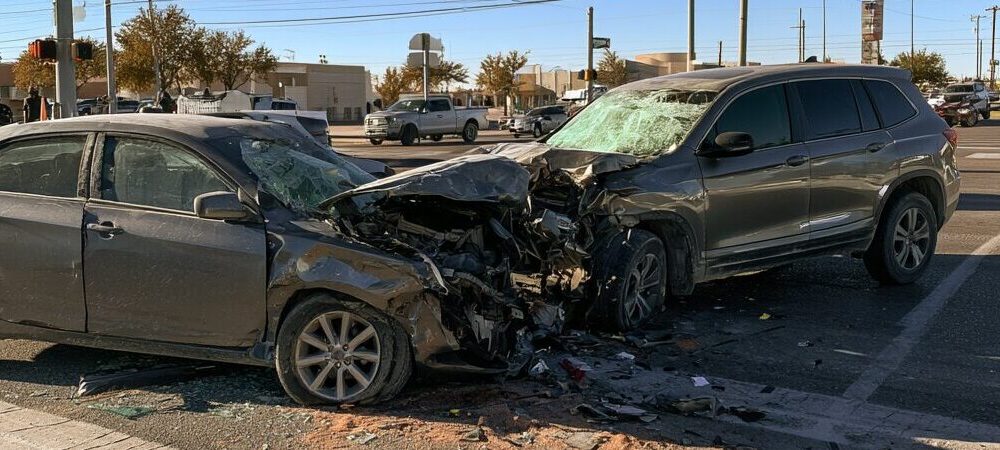
In Texas, the driver making the left turn is usually presumed at fault. That’s because Texas law requires turning drivers to yield to oncoming traffic before crossing an intersection.
That said, this presumption isn’t automatic. Fault depends on what actually happened, and the evidence often tells a different story than the initial police report.
Here are the three most common fault outcomes in these crashes:
- Turning driver at fault: Failed to yield to oncoming traffic that had the clear right of way.
- Oncoming driver at fault: Ran a red light, was speeding, or was distracted at the time of impact.
- Shared fault: Both drivers made errors that contributed to the crash.
What Texas Law Says About Left Turns and Right of Way
Under Texas Transportation Code § 545.152, a driver turning left must yield to any oncoming vehicle close enough to be an immediate hazard. Yielding means you wait until it is clearly safe before crossing oncoming lanes.
If you have a solid green light, you may turn but must still yield to oncoming traffic. If you have a green arrow, that is a protected turn signal, meaning you have the right of way and oncoming traffic is stopped.
Violating this statute can support a finding of negligence against you. Negligence simply means a driver failed to act with reasonable care. But a violation alone does not end your case.
When the Left-Turning Driver Is Not Fully at Fault
The turning driver is not always the one to blame. If the oncoming driver broke a traffic law or acted dangerously, fault can shift entirely or be shared between both parties.
Common situations where the turning driver may not be fully responsible include:
- The oncoming driver ran a red light or blew through a stop sign.
- The oncoming driver was traveling well above the posted speed limit.
- The oncoming driver was distracted, impaired, or drowsy behind the wheel.
- The oncoming driver had no headlights on at night.
- A parked truck, overgrown bushes, or another obstruction blocked your view.
- Another driver incorrectly waved you through when it was not safe.
Proving any of these exceptions requires solid evidence gathered quickly after the crash.
How Texas Comparative Fault Rules Affect Your Claim
Texas uses a modified comparative fault system, which is the legal rule that decides how much compensation you can recover when more than one person shares blame for a crash.
Under this rule, you can recover damages as long as you are 50% or less at fault. Your total compensation is then reduced by your percentage of blame. If you are found 51% or more at fault, you recover nothing.
Here is how that plays out in real numbers:
| Your Fault | Total Damages | What You Recover |
| 0% | $100,000 | $100,000 |
| 25% | $100,000 | $75,000 |
| 50% | $100,000 | $50,000 |
| 51% | $100,000 | $0 |
Insurance adjusters know this rule well and will work hard to push your fault percentage as high as possible. I push back with evidence and trial preparation.
What Causes Most Left Turn Accidents in Texas
Most left turn crashes come down to a handful of predictable behaviors and road conditions. Knowing what caused your crash is the first step toward proving who is responsible.
Misjudged Gap or Speed
Drivers often misjudge how fast oncoming traffic is moving or how much space they actually have. At high-speed Texas intersections, even a small miscalculation results in a violent collision.
Speeding or Red Light Running by Oncoming Traffic
When an oncoming driver blows through a yellow or red light, the turning driver has no chance to react. Excessive speed also makes it nearly impossible to judge a safe gap before turning.
Solid Green vs. Protected Arrow Confusion
Some drivers treat a solid green light as a protected turn signal. They turn directly into active oncoming traffic, wrongly assuming other vehicles have a red light.
Obstructed Views and Poor Visibility
Rain, sun glare, large parked trucks, and overgrown vegetation all block a driver’s sightlines. Unlit vehicles at night are nearly invisible until it is far too late to stop.
Left Turns from Driveways and Parking Lots
These crashes are especially common along busy Lubbock arterials like Slide Road and 50th Street. Drivers crossing traffic from a private driveway carry a heightened legal duty to yield.
Truck Buttonhook Turns
A buttonhook turn is when a large commercial truck swings wide to the right before making a sharp left turn. Passenger cars positioned beside the truck often get trapped and crushed in the turning radius.
What Evidence Proves Fault in a Left Turn Crash
Strong left turn accident cases are built on physical evidence and electronic data collected as quickly as possible after the crash. Traffic camera footage can be overwritten within days, and skid marks fade quickly.
The most valuable evidence in these cases includes:
- Signal timing logs: Confirm whether the light was green, yellow, or red at the moment of impact.
- Traffic, dash, and business cameras: Capture exactly what happened in real time.
- Event data recorder (EDR) downloads: Reveal each driver’s speed, braking, and throttle input in the seconds before impact.
- Police report and citations: Document the responding officer’s initial findings and any tickets issued.
- Witness statements: Preserve unbiased, firsthand accounts from people who saw the crash.
- Medical records: Directly connect your injuries to the collision.
I send preservation letters immediately after you hire me to lock down this evidence before it disappears.
What to Do After a Left Turn Accident in Texas
What you do in the hours after a left turn crash directly affects the strength of your claim. Here are the steps that matter most.
Call Police and Request a Crash Report
Always call 911 so an officer can document the scene. The official crash report becomes one of the most important pieces of evidence in your case.
Photograph the Scene, Vehicles, and Signals
Take clear photos of vehicle damage, skid marks, road markings, and the traffic signals. Visual evidence is hard for insurance companies to dispute.
Get Same-Day Medical Evaluation
Go to an emergency room or urgent care clinic immediately, even if you feel fine. Adrenaline masks pain, and a same-day medical record directly links your injuries to the crash.
Decline Recorded Statements to the Other Insurer
The other driver’s insurance adjuster will call you quickly, hoping you will say something that admits fault. Politely decline any recorded statement until you have spoken with an attorney.
Contact a Texas Left Turn Accident Lawyer
Reach out to an experienced attorney as soon as you can so evidence can be preserved and your rights protected from the start.
Why Left Turn Accidents Cause Serious Injuries
The angle of impact in a left turn crash typically results in a T-bone strike directly to the driver or passenger door. The side of a vehicle has far less structural protection than the front or rear, meaning the physical force transfers directly to the occupants.
Common injuries in these crashes include whiplash, herniated discs, broken bones, traumatic brain injuries, and internal organ damage. In severe cases, these crashes are fatal.
Motorcyclists, cyclists, and pedestrians face the greatest risk because they have no protective metal structure around them at all.
What Compensation You Can Recover After a Left Turn Crash
Texas law allows you to recover two types of damages after a crash. Economic damages cover your measurable financial losses, while non-economic damages cover the personal toll the crash takes on your life.
Recoverable compensation typically includes:
- Medical expenses: Emergency care, surgeries, rehabilitation, and future medical treatment.
- Lost wages: Income you missed while recovering, plus reduced future earning capacity if your injuries are permanent.
- Pain and suffering: Compensation for physical pain and emotional distress caused by the crash.
- Physical impairment and disfigurement: Additional recovery for permanent scarring, disability, or loss of function.
- Property damage: The cost to repair or replace your vehicle and any personal belongings damaged in the crash.
How Long You Have to File a Left Turn Accident Claim in Texas
You generally have two years from the date of the crash to file a personal injury lawsuit in Texas. This deadline is called the statute of limitations, and missing it permanently bars you from recovering any compensation.
Do not wait to act. Traffic camera footage and electronic signal data are typically deleted within 30 to 90 days. I recommend beginning the investigation promptly to help preserve available evidence.
How Insurers Fight Left Turn Claims and How I Respond
Insurance companies almost always try to push fault back onto the injured driver. Their goal is simple: if they can get your fault above 50%, they pay nothing.
Common tactics include inflating your estimated speed, disputing the color of the traffic light, claiming your injuries existed before the crash, and pressuring you into a recorded statement early in the process.
As a skilled Texas auto accident attorney, I respond by pulling EDR data, subpoenaing signal timing logs, retaining accident reconstruction experts when needed, and preparing every case as if it is going to trial. Insurance companies settle more fairly when they know you are ready to fight.
Injured in a Left Turn Accident? Get Legal Help Today
At Perrin Law PLLC Injury & Accident Lawyer, you work directly with me from the first call to the final resolution. I serve injured clients in Lubbock and across Texas, and you pay nothing unless I win your case.
If you were hurt in a left turn crash, do not give a recorded statement, accept an early settlement offer, or assume the fault determination is final. Contact my office today for a free consultation and let me put my experience to work for you.
Left Turn Accident FAQs in Texas
Is the Left-Turning Driver Always at Fault in Texas?
No. While the turning driver is presumed at fault under Texas law, that presumption can be overcome if the oncoming driver was speeding, ran a red light, or drove recklessly.
Can I Still Recover Damages if I Was Partly at Fault for the Crash?
Yes, as long as you are 50% or less at fault under Texas’s modified comparative fault rule. Your total compensation will be reduced by your percentage of blame.
What If Another Driver Waved Me Through the Intersection?
You still have a legal duty to confirm the intersection is clear before turning, even if another driver signals you to go. That said, the driver who waved you through may share liability for creating a dangerous situation.
Do I Still Have a Case if the Police Gave Me a Ticket?
Yes. A police ticket reflects the officer’s initial opinion, not a final legal determination of fault. We can challenge the citation using crash data, video evidence, and expert testimony.
Does Not Wearing a Seatbelt Reduce My Compensation?
It can. Texas juries are allowed to consider your failure to wear a seatbelt when assigning fault percentages, which may reduce your final compensation if it worsened your injuries.
How Soon Should I Contact a Left Turn Accident Lawyer in Texas?
You should contact an attorney as soon as possible after seeking medical care. Critical evidence like traffic camera footage and signal timing data can be deleted within weeks of the crash.
How Much Does a Free Consultation with Perrin Law PLLC Cost?
A consultation is completely free, and I work on a contingency fee basis. This means you owe nothing upfront, and I only get paid if I win your case.