
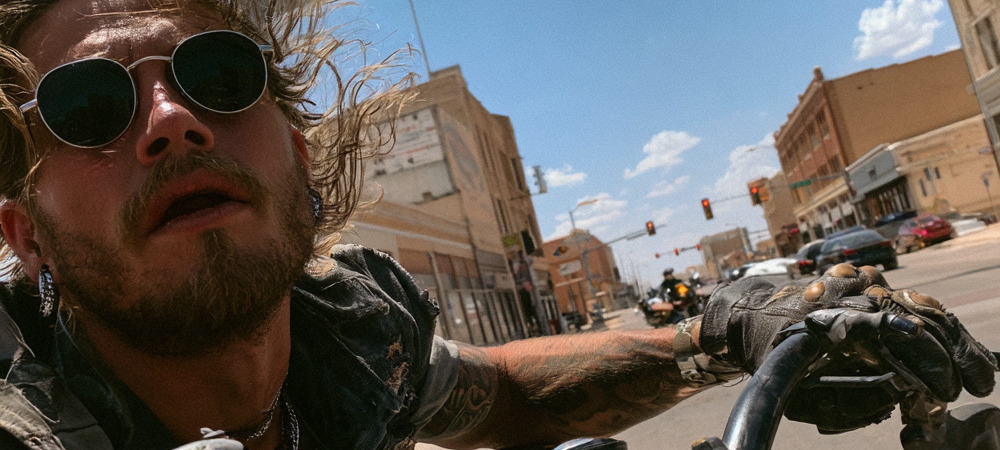
Yes, you can recover compensation for motorcycle accident injuries in Texas even if you weren’t wearing a helmet. Texas law does not automatically bar your claim, because what matters most is who caused the crash.
What Texas Helmet Law Actually Requires
Texas law, specifically Section 661.003 of the Transportation Code, requires riders and passengers under 21 to wear a DOT-approved helmet at all times. But if you’re 21 or older, the law provides a legal exemption if you meet one of two conditions:
- Completed a safety course: You finished a state-approved motorcycle operator training program through the Texas Department of Public Safety.
- Carry qualifying insurance: Your health insurance includes at least $10,000 in medical benefits covering motorcycle accident injuries.
There’s something the adjuster won’t volunteer. Texas treats helmet enforcement as a secondary offense, meaning police cannot pull you over solely for not wearing one. And if you qualified for the exemption, you were riding legally, which is critical to how your case is built.
As a Texas motorcycle accident lawyer, one pattern I consistently see in motorcycle claims across Lubbock County is riders who genuinely completed the safety course or carried the right coverage, but never kept the paperwork after a crash scattered their belongings along I-27 or US-84.
Insurance adjusters routinely treat a missing certificate as a missing exemption, even when the rider qualified the day of the crash. In my experience handling these cases in West Texas, tracking down the Texas Department of Public Safety course record or the insurer’s own declarations page early is often what separates a full recovery from a reduced one.
How Helmet Status Can Affect Your Compensation
Texas uses modified comparative negligence to settle fault in personal injury cases. This is a legal rule that assigns each party a percentage of the blame for a crash, then adjusts your compensation based on your share of that blame.
Under Texas Civil Practice and Remedies Code § 33.001, your recovery is reduced by your fault percentage. If you have $100,000 in damages but are found 10% at fault, your recovery drops to $90,000. The insurance company’s entire strategy is to use your missing helmet to push your fault percentage up, and our job is to fight that at every turn.
How the 51 Percent Rule Works
| Your Fault Percentage | What Happens to Your Claim |
| 50% or less | You recover damages, reduced by your fault share |
| 51% or more | You recover nothing |
Not wearing a helmet almost never, by itself, pushes a rider over that 51% line. The driver who caused the collision almost always carries the dominant share of the blame, and that’s exactly where we keep the focus.
Does a Missing Helmet Affect Every Injury?
No, and this is one of the oldest tricks in the adjuster’s playbook. A helmet protects your head. It has zero bearing on a broken femur, a fractured pelvis, road rash, a ruptured spleen, or a damaged spine.
Adjusters will try to use your missing helmet to discount your entire claim, including injuries that have nothing to do with your head. We shut that down with your medical records and expert testimony that documents exactly what each injury is, what caused it, and why your helmet had nothing to do with it.
What I see across the motorcycle injury claims I handle in Lubbock and the South Plains is that adjusters almost always try the same move first, offering a quick number that quietly folds in every injury under the helmet argument.
Riders treated at Covenant Medical Center or University Medical Center for a fractured pelvis or road rash are often told, informally, that their lack of protective gear limits what the insurer will pay for those injuries too.
That is not how Texas law works, and in my experience the moment I put the adjuster on notice that I am separating each injury by its actual cause, the tone of the negotiation changes almost immediately.
What If You Didn’t Qualify for the Exemption?
If you’re 21 or older but didn’t complete the safety course and didn’t carry the required coverage, your case is harder. It is not over.
Here’s exactly what we do:
- Isolate unrelated injuries: We identify every injury a helmet couldn’t have prevented, broken bones, internal trauma, road rash, and fight for full compensation on each one.
- Challenge your fault percentage: We push back hard on the inflated blame number the insurer tries to assign and counter it with actual crash evidence.
- Redirect focus to the at-fault driver: We build an aggressive record around what the other driver did, so the case is about their recklessness, not your gear.
Most riders in this situation still recover meaningful compensation when the case is handled with the aggression it deserves.
How We Push Back Against the Helmet Defense
This isn’t emotional. It’s strategic. Here’s the specific work we do to protect your case.
Documenting the Exemption
If you completed the safety course or carried qualifying insurance, we prove it immediately. We pull your course certificate from the Texas Department of Public Safety or request your insurance declarations page confirming the $10,000 in coverage. Once the exemption is documented, the legal argument that you were negligent for riding without a helmet collapses entirely.
Separating Your Injuries from Helmet Use
At Perrin Law PLLC Injury & Accident Lawyer, we work with medical experts and biomechanical engineers who examine your injuries individually and connect each one to the specific forces of the crash. For high-speed impacts, experts can often demonstrate that even a properly fitted helmet wouldn’t have prevented the traumatic brain injury, because the collision dynamics made it unavoidable.
Building the Case Against the At-Fault Driver
We use accident reconstruction, black box data from the other vehicle, cell phone records, witness statements, and scene photographs to document exactly what the other driver did. When that evidence shows speed, distraction, or impairment, your helmet becomes a footnote, not the headline.
How Insurance Companies Use the Helmet Against You
Insurance adjusters have a standard playbook. They run it every time a rider wasn’t wearing a helmet, and it exists for one reason: to get you to settle for less than your case is worth.
- The lowball offer: They make a fast, cheap offer and cite your helmet as justification. We reject it and respond with a formal demand backed by medical evidence and legal authority.
- The inflated fault demand: They insist you accept 30% or 40% of the blame. We counter with what the actual crash evidence supports, which is almost always far less.
- The blanket discount: They try to apply the helmet argument to your broken leg, torn shoulder, and fractured spine. We block that immediately with medical causation evidence.
- The reckless-rider narrative: They paint you as someone who courts danger, hoping it poisons how a jury sees you. We counter with your riding history and the documented facts of what their driver actually did.
Do not give a recorded statement to the other driver’s insurance adjuster. They are not gathering facts; they are building a case against you. Call me before you say a single word.
Across the no-helmet motorcycle claims I have worked through in Lubbock County, the lowball offer almost always arrives before the rider has seen a single itemized medical bill. I have watched adjusters cite a missing helmet on crashes that happened nowhere near a residential street, including collisions along Loop 289 and the rural highways of the Permian Basin, where the other driver was clearly at fault.
When a case like that ends up filed in Lubbock County District Court, the helmet argument tends to disappear from the conversation entirely once a jury pool is a real possibility. That shift is exactly why I refuse to let the first offer set the terms of the claim.
What Compensation Can You Recover?
Your helmet status doesn’t limit the types of damages you can pursue under Texas law. We fight for every dollar across every category.
- Medical expenses: Every bill, emergency care, surgery, rehabilitation, and future treatment your injuries will require.
- Lost wages and earning capacity: Income you’ve already missed and what you stand to lose if your injuries affect your ability to work long-term.
- Pain and mental anguish: Physical suffering, emotional distress, PTSD, anxiety, and the loss of enjoyment of your daily life.
- Disfigurement and impairment: Permanent scarring, amputation, or loss of function in any part of your body.
- Property damage: The full cost to repair or replace your motorcycle, riding gear, and anything else destroyed in the crash.
- Wrongful death damages: If you lost a family member, we pursue claims for lost financial support, loss of companionship, and the mental anguish your family is living with right now.
What to Do Right Now
The steps you take in the first hours after a crash determine how strong your case will be. Every single one of these matters.
Get Medical Care Today
Go to the emergency room or urgent care immediately, even if you feel okay. This creates a medical record officially linking your injuries to the crash and removes one of the insurer’s favorite arguments, that you weren’t seriously hurt.
Preserve the Evidence
Call 911 and get the police report number. Photograph the scene, your injuries, the damage to your bike, skid marks, and the other vehicle before anything is moved. Do not repair your motorcycle, and hold onto your damaged riding gear.
Refuse the Recorded Statement
Politely decline any request from the other driver’s insurer to give a recorded statement. They are not trying to understand what happened; they are collecting ammunition to minimize what they owe you.
Call Before You Sign Anything
Texas gives you two years from the date of the accident to file a personal injury lawsuit. That clock is already running, and the evidence disappears fast. The sooner we get involved, the better protected your case will be.
Hurt in Texas Without a Helmet? I’ll Take It from Here.
I have extensive experience representing injured riders and their families in Texas and beyond.
My track record includes major verdicts and recoveries in commercial truck cases, along with recognition among the state’s top personal injury verdicts.
When you hire me, you get me, personally. Not a paralegal. Not a case manager. Not an associate who’s never stood in front of a jury. I handle every case from the first phone call through the final verdict, and I prepare each one as though it’s going to trial, because that’s the only posture that forces insurance companies to pay what a case is actually worth.
We work on contingency, which means you pay nothing unless we win. Free consultations are available 24 hours a day, seven days a week. Call my office at 3901 84th Street in Lubbock today. Don’t wait. Don’t let the other side build a case while you’re still figuring out what happened.
Texas Motorcycle No-Helmet Accident FAQ
Is It Legal to Ride Without a Helmet in Texas If You’re Over 21?
Yes, riders 21 and older can legally ride without a helmet if they completed a state-approved motorcycle safety course or carry at least $10,000 in medical insurance benefits covering motorcycle accident injuries.
Can a Police Officer Stop You Just for Not Wearing a Helmet in Texas?
No. Texas classifies the helmet requirement as a secondary offense, meaning an officer must have a separate, independent reason to stop you before they can issue a helmet citation.
Will Not Wearing a Helmet Automatically Push You past the 51 Percent Fault Threshold?
Almost never. Helmet use is one small factor in the fault calculation, and the other driver’s actions in causing the crash almost always represent the dominant share of responsibility.
Can You Recover Compensation If You’re Under 21 and Weren’t Wearing a Helmet?
Yes, though the case becomes more complex. We work to prove that the other driver’s negligence was the primary cause of the crash and your specific injuries.
Does Not Wearing a Helmet Reduce Compensation for Non-Head Injuries like Broken Bones?
No. A helmet only protects your head, so its absence has no legal or medical bearing on injuries to your limbs, torso, or internal organs, despite what the adjuster implies.
What If You Were over 21 but Didn’t Complete the Safety Course or Carry the Required Insurance?
Your case is more difficult but not unwinnable. We isolate the injuries a helmet couldn’t have prevented, challenge the inflated fault percentage, and build the record around what the at-fault driver actually did.
Do You Have to Prove Your Helmet Exemption to the Insurance Company?
Yes, and we handle that for you. We gather your safety course certificate or insurance declarations page and present it directly, stripping the insurer of their primary argument against your claim.
How Long Do You Have to File a Motorcycle Injury Claim in Texas?
Texas gives you two years from the date of the accident to file a personal injury lawsuit. Miss that deadline and you permanently lose the right to seek any compensation for your injuries.