
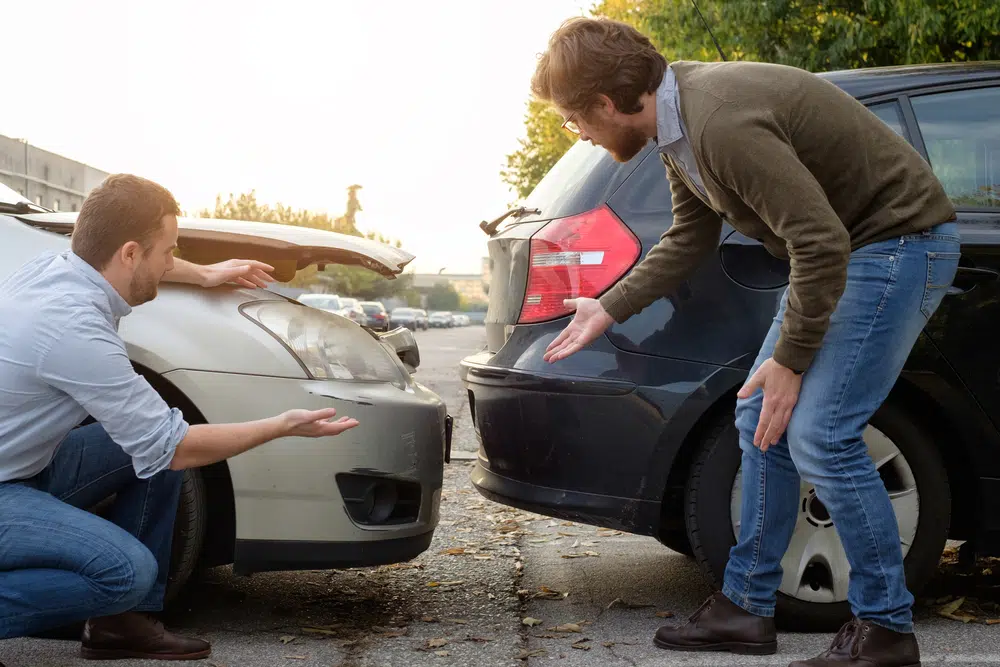
Being blamed for a car accident that wasn’t your fault doesn’t make it true under Texas law. You have the legal right to dispute incorrect fault determinations and fight for the compensation you deserve.
Insurance companies often try to shift blame to avoid paying claims, but taking the right steps immediately protects your rights. The actions you take in the first few hours and days after your crash can make the difference between accepting unfair blame and proving what really happened.
Texas uses a modified comparative fault system that allows you to recover compensation as long as you’re found 50% or less responsible for the accident.
Insurance adjusters often try to assign you majority fault because it eliminates their liability entirely, but you can fight back by preserving evidence, challenging police reports, and building a strong case that proves what really happened.
First Steps to Protect Your Claim
Your behavior at the accident scene directly impacts whether you’ll be blamed for a car accident that wasn’t your fault. Here’s what you must do immediately:
- Never admit fault or apologize to anyone at the scene, even if you feel bad about the situation.
- Call 911 to request police and emergency medical services, even for minor accidents.
- Take extensive photos of all vehicle damage, the accident scene, road conditions, and any visible injuries.
- Get complete contact information from all witnesses, including their names, phone numbers, and what they saw.
- Seek medical attention immediately, even if you feel fine, as some injuries don’t show symptoms right away.
- Report the accident to your insurance company but limit your statement to basic facts only.
These steps create an official record of what happened and preserve evidence before it disappears. Insurance adjusters can’t easily twist the facts when you have solid documentation backing up your version of events.
How Texas Fault Rules Affect Your Claim
Texas uses a legal system called modified comparative fault to determine who pays for accident damages. This means you can still recover money for your injuries even if you were partially responsible for the crash, as long as you weren’t mostly at fault.
Understanding this system is crucial when you’re being blamed for a car accident that wasn’t your fault. The rules directly affect how much money you can recover and whether you can recover anything at all.
The 51 Percent Bar in Texas
Under Texas law, you can only recover damages if a jury finds you 50% or less at fault. If you’re found 51% or more responsible, you’re legally barred from recovering any compensation, regardless of how severe your injuries are.
Here’s how this works in practice: If your damages total $100,000 and you’re found 40% at fault, you can recover $60,000. But if you’re found 51% at fault, you recover nothing. This harsh rule makes fighting fault determinations absolutely critical to your financial recovery.
Insurance companies know about this 51% rule and use it strategically. They’ll fight to push your fault percentage above 50% because it eliminates their liability entirely.
Does a Ticket or Police Report Decide Fault
A police report or traffic ticket does not legally determine fault in your insurance claim or lawsuit. These documents are just evidence that insurance adjusters and juries consider when making fault decisions.
Police officers often arrive after the accident and base their reports on what drivers and witnesses tell them. They don’t always see what actually happened, and they can make mistakes about who was at fault.
You can challenge the conclusions in a police report if they’re wrong. As a car accident lawyer in Lubbock, Texas, I’ve seen many cases where the initial police report blamed my client, but we proved the other driver was actually responsible through additional evidence and investigation.
How to Dispute an Insurance Fault Decision
Insurance adjusters are trained to find ways to assign fault to you to reduce or eliminate their company’s payout. Their job is to save their company money, not to find the truth about what happened.
When you’re being blamed for a car accident that wasn’t your fault, you don’t have to accept the insurance company’s decision. You can fight back by presenting evidence that proves you weren’t the primary cause of the crash.
Get and Correct Your Texas Crash Report
You can obtain a copy of your official Texas Peace Officer’s Crash Report from the Texas Department of Transportation website. This report contains the officer’s initial fault determination and important details about how the accident happened.
If you find factual errors in the report, such as wrong vehicle positions, incorrect impact locations, or missing witness information, you can request corrections. You have the right to submit a supplement that becomes part of the official record.
An accurate crash report is crucial evidence in your favor. Insurance companies give significant weight to police reports, so correcting errors can shift the blame away from you.
Should You Give a Recorded Statement
I almost always advise clients not to give recorded statements to the other driver’s insurance company without legal representation. These statements are designed to trap you into saying something that can be used against you later.
Adjusters ask seemingly innocent questions that are actually designed to get admissions of fault. They might ask if you were running late, if you had been looking at your phone, or if you could have done anything differently to avoid the accident.
You can politely decline by saying, “I need to speak with my attorney before providing any recorded statement.” You’re not legally required to give these statements, and protecting yourself is more important than being cooperative.
Preserve and Collect Time-Sensitive Evidence
Critical evidence can disappear within hours or days of your accident. Acting quickly to preserve this evidence is essential to proving you weren’t at fault.
- Security camera footage: Security and traffic camera footage is often retained only for a short time, so secure any recordings as soon as possible.
- Physical evidence: Skid marks, debris, and other scene evidence can be washed away by rain or cleared by road crews.
- Witness memories: People forget details quickly, so getting their statements immediately is crucial.
- Vehicle damage: Cars may be repaired or totaled before proper documentation occurs.
The sooner you start collecting evidence, the stronger your case becomes. This evidence often tells a completely different story than the initial fault determination.
Evidence That Shifts Fault off You
The most effective way to challenge a fault determination is with strong, objective evidence. Insurance companies can argue with opinions, but they can’t argue with facts.
When you’re being blamed for a car accident that wasn’t your fault, solid evidence becomes your best defense. Physical evidence and witness testimony often prove what really happened, regardless of initial assumptions.
Scene Photos, Vehicle Damage and Skid Marks
Photographs taken at the accident scene provide powerful visual evidence of what happened. The location and severity of vehicle damage can prove the angle and force of impact, which helps determine who hit whom.
Skid marks tell the story of each driver’s actions before the crash. An accident reconstruction expert can use these marks to calculate vehicle speeds, determine who was braking, and establish the sequence of events.
Take photos from multiple angles, including wide shots of the entire scene and close-ups of specific damage. Don’t forget to photograph road conditions, traffic signs, and anything else that might have contributed to the accident.
Neutral Witnesses and Camera Footage
Independent witnesses who have no connection to either driver provide the most credible testimony. Their accounts carry much more weight than statements from passengers or friends who might be biased.
Security cameras from nearby businesses, traffic cameras, and dash cams can provide unbiased video evidence of the collision. This footage often resolves disputes instantly by showing exactly what happened.
I work quickly to identify and secure this type of evidence before it’s lost. Video footage is especially powerful because it’s objective and can’t be disputed.
Cell Phone Records and EDR Downloads
Modern vehicles contain Event Data Recorders (EDRs), which are like airplane black boxes that record critical data in the seconds before a crash. This data includes your speed, braking actions, steering inputs, and seatbelt use.
EDR data can prove you were driving safely and following traffic laws at the time of impact. It’s objective evidence that insurance companies can’t argue with or dismiss.
Cell phone records can prove the other driver was texting, talking, or using apps at the moment of the crash. Distracted driving is a major cause of accidents, and phone records provide clear proof of this dangerous behavior.
Who Pays While Liability Is Disputed
While you’re fighting to clear your name, medical bills and repair costs continue to pile up. Fortunately, you may have several options for immediate financial relief through your own insurance coverage.
Don’t let financial pressure force you to accept an unfair settlement while fault is being disputed. These coverage options can help you get the care and repairs you need while we fight for full compensation.
Using PIP or MedPay for Medical Bills
Personal Injury Protection (PIP) and Medical Payments (MedPay) are types of coverage that pay your medical bills regardless of who caused the accident. In Texas, PIP coverage is automatically included in your policy unless you specifically rejected it in writing.
These coverages typically pay for hospital bills, doctor visits, physical therapy, and other medical expenses related to your accident injuries. Using this coverage doesn’t affect your right to pursue the at-fault driver for additional damages.
MedPay is optional coverage that works similarly to PIP but may have different limits and benefits. Check your policy to see what coverage you have available.
UM/UIM and Collision for Vehicle Losses
If the other driver was at fault but has no insurance or insufficient coverage, your Uninsured/Underinsured Motorist (UM/UIM) coverage can step in to pay your claim. This coverage essentially substitutes for the at-fault driver’s missing or inadequate insurance.
For vehicle repairs, you can use your collision coverage to get your car fixed immediately. While you’ll pay your deductible upfront, your insurance company will try to recover it from the at-fault driver’s insurer through a process called subrogation.
Using your own coverage doesn’t mean you’re admitting fault. It’s simply using insurance benefits you’ve paid for to get back on your feet while the fault dispute continues.
Special Situations That Complicate Blame
Certain types of accidents create unique challenges when determining fault. Insurance companies often rely on common assumptions in these cases, especially in truck accidents, but the actual facts can prove otherwise.
Understanding these special situations helps you recognize when you’re being unfairly blamed and need to fight back with evidence and legal expertise.
Hit and Run Claims and UM Coverage
If you were the victim of a hit-and-run accident, proving the fleeing driver was at fault is usually straightforward. However, you must prove that physical contact occurred between the vehicles to trigger your Uninsured Motorist coverage.
Paint transfer, debris at the scene, and witness testimony can establish that contact occurred. Security cameras or dash cam footage showing the other vehicle fleeing can also support your claim.
Hit-and-run cases require quick action to preserve evidence before the scene is cleaned up and witnesses disappear. The sooner you report the accident and start investigating, the better your chances of proving what happened.
Rear-End Crashes and Brake Checking
There’s a common myth that the driver who rear-ends another vehicle is always at fault, but this isn’t true under Texas law. If the front driver engaged in dangerous behavior like brake checking or cutting you off, they can be held partially or entirely responsible.
Brake checking occurs when a driver suddenly slams on their brakes for no legitimate reason, often in road rage situations. This dangerous behavior can make the front driver liable for the resulting collision.
Evidence like witness statements, traffic camera footage, and EDR data can prove that the front driver’s actions caused the accident. Don’t automatically accept blame just because you rear-ended another vehicle.
Deadlines That Can Make or Break Your Claim
Texas law imposes strict deadlines that can permanently bar your right to compensation if you miss them. Understanding these deadlines is crucial when you’re being blamed for a car accident that wasn’t your fault.
Missing a legal deadline can end your case forever, regardless of how clear the evidence is that the other driver was responsible. Don’t let time limits prevent you from getting the justice you deserve.
Texas Two-Year Lawsuit Deadline
In Texas, you have exactly two years from the date of your accident to file a lawsuit against the at-fault driver. This statute of limitations deadline is absolute—miss it and you lose your right to compensation forever.
The two-year clock starts ticking on the day you were injured, not when you discover the full extent of your damages or when insurance companies make their fault determinations. Some rare exceptions exist for cases involving minors or undiscovered injuries, but these are extremely limited.
Camera and Data Retention Timelines
Critical evidence has much shorter preservation deadlines than the lawsuit filing deadline. This evidence often disappears within days or weeks of your accident if you don’t act quickly to secure it.
- Traffic cameras: Many security and traffic cameras overwrite recordings unless someone requests that the footage be preserved.
- Business security footage: Often retained for only a short period before being overwritten.
- EDR data: Can be lost if the vehicle continues to be driven or is repaired.
- Cell phone records: Carriers have different retention policies, but detailed records may be deleted quickly.
At Perrin Law Injury & Accident Lawyer, I recommend contacting an attorney within days of your accident to ensure this time-sensitive evidence is preserved. Once it’s gone, it’s usually impossible to recover.
What Compensation You Can Recover
When you successfully prove that you weren’t primarily at fault for your accident, Texas law allows you to recover compensation for all your losses. This includes much more than just your immediate medical bills and vehicle repairs.
Understanding what you can recover helps you evaluate whether fighting the fault determination is worthwhile, which is why consulting with a personal injury lawyer can clarify your options. Even if you’re found partially at fault, you can still recover significant compensation as long as you’re 50% or less responsible.
The types of compensation available include:
- Medical expenses: All past and future costs for hospital stays, surgeries, doctor visits, physical therapy, medications, and medical equipment.
- Lost wages: Income you’ve lost while unable to work, plus any reduction in your future earning capacity due to permanent injuries.
- Pain and suffering: Compensation for physical pain, emotional distress, mental anguish, and loss of enjoyment of life.
- Property damage: The cost to repair or replace your vehicle and any other damaged property like phones, laptops, or clothing.
Your fault percentage directly reduces these amounts under Texas’s comparative fault system. This makes fighting unfair blame determinations crucial to maximizing your recovery.
How I Prove Fault and Protect Your Recovery
When clients come to me after being blamed for a car accident that wasn’t their fault, I immediately launch a comprehensive investigation to uncover the truth. I don’t rely on insurance company investigations or police reports alone—I conduct my own thorough analysis of what really happened.
My investigation process includes hiring accident reconstruction experts, tracking down and interviewing witnesses, securing video footage before it’s deleted, and obtaining electronic data from vehicles and cell phones.
I treat every case as if it will go to trial, which shows insurance companies that we’re serious about fighting their unfair fault determinations.
I work on a contingency fee basis, which means you pay no attorney fees unless I win your case. This aligns my interests with yours—I only succeed when you succeed, so I’m motivated to fight as hard as possible for the best possible outcome.
My decades of experience as a Texas car accident lawyer have taught me how insurance companies operate and what evidence is most effective in shifting fault determinations. I use this knowledge to build the strongest possible case for my clients.
Don’t Wait—Protect Your Rights Now
If an insurance company is trying to blame you for an accident that wasn’t your fault, don’t wait to get legal help. The longer you wait, the more difficult it becomes to gather the evidence needed to prove your case and challenge their fault determination.
Evidence disappears, witnesses forget details, and legal deadlines approach quickly. What seems like plenty of time can disappear rapidly when you’re dealing with injuries, vehicle repairs, and the stress of an unfair blame game.
Contact me today for a free, no-obligation consultation to discuss your accident and learn how I can protect your rights. I’ll review the facts of your case, explain your legal options, and help you understand the best path forward for proving you weren’t at fault.
Frequently Asked Questions
Can I Be Sued Even if the Accident Wasn’t My Fault?
Yes, anyone can file a lawsuit regardless of fault, but that doesn’t mean they’ll win. If you truly weren’t at fault and have evidence to prove it, you have strong defenses and may even be able to recover your legal costs from the other party.
Will My Insurance Rates Increase if I Use My Coverage for a Not-at-Fault Accident?
Generally, your insurance rates should not increase if you use coverage like PIP or UM/UIM for an accident that wasn’t your fault. However, using collision coverage might cause a small increase, though it’s usually less than paying out of pocket for repairs.
Does Saying “I’m Sorry” at the Accident Scene Admit Legal Fault?
While apologetic statements can potentially be used against you, simply saying “I’m sorry” isn’t automatically an admission of legal fault in Texas. However, it’s always best to avoid making any apologetic statements to prevent insurance companies from twisting your words against you later.
How Long Do I Have to Report the Accident to My Insurance Company?
You should report the accident to your insurance company as soon as reasonably possible, typically within 24 hours. Your policy requires prompt notification to use coverages like PIP, collision, or UM/UIM, and delays can potentially affect your coverage.
What Happens if the Other Driver Doesn’t Have Insurance?
If the at-fault driver has no insurance, your Uninsured Motorist (UM) coverage should apply to compensate you for your injuries and damages. This coverage essentially substitutes for the missing insurance that the at-fault driver should have had.