
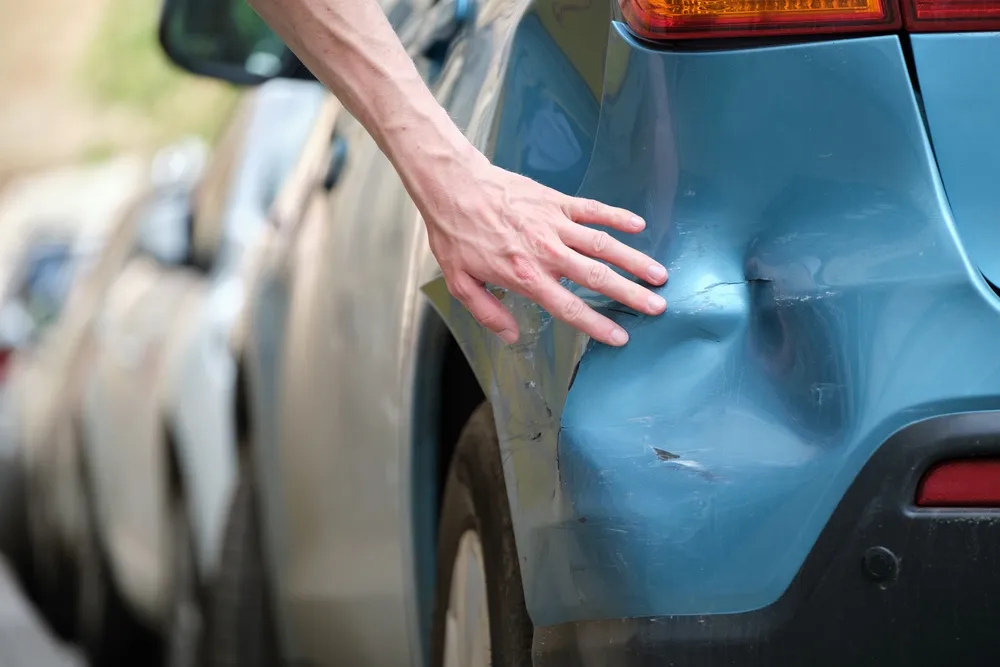
In Texas, the at-fault driver’s insurance typically pays for parked car accident damage, but hit-and-run situations require you to use your own collision or uninsured motorist property damage coverage.
When someone commits a hit-and-run against your parked car, you can still recover compensation through your insurance policy, though you’ll likely need to pay a deductible first.
Parked car accidents happen more frequently than most people realize, especially in busy parking lots and on residential streets. These incidents often involve drivers who are distracted, impaired, or simply not paying attention to their surroundings.
While the legal responsibility is usually clear, the practical challenges of identifying the at-fault driver and securing compensation can be complex.
This guide explains who pays for parked car accident damage in Texas, what steps you should take immediately after discovering damage, how Texas hit-and-run laws protect you, and when you might still be partially at fault even though your car was parked.
Common Causes of Parked Car Accidents
Parked car accidents happen more often than most people realize in Texas. A parked car accident is any collision involving a stationary, unoccupied vehicle. These crashes typically occur in parking lots, on residential streets, or along busy roadways where cars are legally parked.
Most parked car collisions result from basic driver negligence. Here are the most common causes I see in these cases:
- Distracted driving: Drivers texting, adjusting GPS devices, or eating often drift out of their lane and strike parked vehicles.
- Impaired driving: Parked car accidents often involve impaired individuals with slower reaction times and poor judgment, making them more likely to hit stationary objects.
- Poor visibility conditions: Rain, fog, or darkness can make it difficult to see parked cars, especially if they lack proper lighting.
- Backing out carelessly: Drivers reversing from parking spaces without checking mirrors or blind spots frequently hit nearby parked cars.
- Excessive speed in parking lots: Going too fast in confined areas reduces your ability to stop or maneuver around obstacles.
- Door dings and sideswipes: Opening car doors too wide or misjudging distances while parking can cause significant damage.
Weather-related crashes also contribute to parked car accidents in Texas. Ice, heavy rain, or strong winds can cause drivers to lose control and strike parked vehicles.
What Should I Do First After Finding Damage to My Parked Car?
Finding damage to your parked car is frustrating and stressful. Your immediate priority is gathering evidence before the scene changes or documentation disappears.
Don’t move your car or touch anything until you’ve taken photos. Even minor damage can cost thousands to repair, and proper documentation protects your right to compensation.
Step by Step Actions to Protect Your Claim
Follow these steps in order to preserve your claim:
- Check for a note: Texas law requires drivers to leave contact information after hitting a parked car. Look on your windshield, under wipers, or tucked into door handles.
- Take comprehensive photos: Document the damage from multiple angles, your car’s position, nearby vehicles, street signs, and any debris or paint transfer on the ground.
- Look for witnesses: Ask people in nearby stores, walking by, or in other cars if they saw what happened. Get their names and phone numbers if they’re willing to help.
- Search for security cameras: Check for surveillance cameras on businesses, ATMs, apartment buildings, traffic lights, or residential doorbell cameras.
- Call police immediately: Even if officers can’t respond, filing a report creates an official record that’s crucial for insurance claims and hit-and-run cases.
- Contact your insurance company: Report the incident as soon as possible to start the claims process and comply with your policy requirements.
Time is critical here. Security footage gets deleted within days, witnesses forget details, and physical evidence can be cleaned up or moved.
Who Pays for Damage to My Parked Car in Texas?
In Texas, the at-fault driver’s liability insurance should pay for your damages. Texas is an at-fault state, which means the person who caused the accident is financially responsible for the resulting damage.
However, collecting that payment becomes complicated when the driver flees the scene. In hit-and-run situations, you’ll need to turn to your own insurance policy for coverage.
Which Insurance Pays When the Driver Flees?
When someone hits your parked car and leaves, your recovery options depend on what coverage you carry. Here’s how different types of insurance respond:
- Collision coverage: Pays for vehicle repairs regardless of who caused the accident, but you must pay your deductible first.
- Uninsured motorist property damage: Covers hit-and-run accidents where the driver can’t be identified, typically with a lower deductible.
- Comprehensive coverage: Does not apply to hit-and-run accidents despite its broad name, this covers theft, vandalism, and weather damage.
UM Property Damage Versus Collision in Texas Hit and Run Claims
| Coverage Type | Typical Deductible | When It Applies | Main Advantage | Main Drawback |
| UM Property Damage | $250 (set by law) | Hit-and-run with unidentified driver | Lower, fixed deductible | Must prove hit-and-run occurred |
| Collision | $500-$2,000+ | Any collision regardless of fault | Always available if you carry it | Higher out-of-pocket cost |
Will My Rates Go Up if I File a Claim?
Texas law does not prohibit insurance companies from raising your rates after not-at-fault accidents, including hit-and-run claims; see Texas law prohibits insurance companies for details. However, some insurers may still increase premiums if you file multiple claims within a short period.
The key is understanding your policy and working with a Lubbock car accident attorney who knows how to navigate the claims process effectively.
What Texas Hit and Run Laws Apply to Parked Cars?
Hitting a parked car and leaving is a crime in Texas, not just a civil matter. The Texas Transportation Code sets clear requirements for what drivers must do after striking an unattended vehicle.
What Are My Duties if I Hit a Parked Car?
If you hit a parked car, you must:
- Stop immediately: You cannot leave to find the owner and return later, that’s still considered leaving the scene.
- Locate the owner: Make reasonable efforts to find the person, such as asking in nearby businesses or checking for apartment numbers.
- Leave a detailed note: If you can’t find the owner, write a note with your name, address, phone number, and brief explanation of what happened.
- Report if required: Contact police if damage appears to exceed $1,000 or if anyone was injured.
What Are the Penalties for Leaving the Scene in Texas?
The punishment depends on the amount of damage caused:
- Class C misdemeanor: For damage under $200, you face fines up to $500.
- Class B misdemeanor: For damage over $200, penalties include up to 180 days in jail and fines up to $2,000.
- Enhanced penalties: Previous convictions or higher damage amounts can increase these penalties significantly.
These are criminal charges that go on your permanent record, separate from any civil liability for damages.
Am I at Fault if My Car Was Illegally Parked?
Being illegally parked doesn’t automatically make you at fault for an accident. Texas uses modified comparative negligence to assign fault percentages based on everyone’s actions.
Modified comparative negligence is a legal system where fault gets divided among all parties involved. This means you can still recover damages even if you contributed to the accident, as long as you’re not more than 50% at fault.
How the 51 Percent Bar Rule Impacts Parked Car Claims
Under Texas law, you can only recover compensation if you’re 50% or less responsible for the accident. If you’re found 51% or more at fault, you receive nothing.
Here are some examples of how this works:
- Car illegally parked but hit by drunk driver: You might be assigned 5-15% fault, reducing your recovery by that amount.
- Car blocking a traffic lane hit by distracted driver: You could be assigned 30-40% fault, still allowing substantial recovery.
- Car parked in a clearly dangerous location: If you’re found 51% or more at fault, you recover nothing.
The key is that illegal parking is just one factor. The other driver’s negligence, weather conditions, visibility, and other circumstances all matter.
Who Has the Right of Way in Texas Parking Lots?
Texas traffic laws apply in parking lots, contrary to what many drivers believe. Parking lots have a clear hierarchy that determines right-of-way in different situations.
The hierarchy works like this:
- Main thoroughfares: The primary lanes around the parking lot perimeter have the highest priority.
- Feeder lanes: The rows between parking spaces must yield to main thoroughfare traffic.
- Parking spaces: Drivers backing out have the lowest priority and must yield to all moving traffic.
Additional right-of-way rules include:
- First to move: When two cars back out simultaneously, whoever started moving first has right-of-way.
- Pedestrians: Always have right-of-way in parking lots, regardless of where they’re walking.
- Posted signs: Override general rules, so stop signs and directional arrows must be followed.
Understanding these rules helps determine fault when parking lot accidents occur.
How Do I Preserve Video and Evidence After a Parked Car Accident?
Video evidence often determines the outcome of parked car accident claims, but it disappears fast. Surveillance footage is often retained only for a limited time, so you must act immediately.
Security cameras are everywhere these days, on storefronts, ATMs, apartment buildings, traffic poles, and even residential doorbells. The trick is identifying and preserving this footage before it’s gone forever.
Steps to Preserve Store and Apartment Video Before It’s Deleted
Here’s exactly what you need to do:
- Map all potential cameras: Walk around the area and identify every possible camera that might have captured the incident.
- Contact property owners immediately: Visit businesses in person rather than calling, face-to-face requests get better results.
- Send formal preservation letters: Written requests create legal obligations and show you’re serious about pursuing the case.
- Offer to pay copying costs: Many businesses charge small fees to burn footage onto discs, which is worth every penny.
- Document your efforts: Keep detailed records of who you contacted, when, and their responses for potential legal action later.
- Follow up persistently: Don’t assume one request is enough, check back to ensure the footage is actually preserved.
I regularly send preservation of evidence letters on behalf of clients because businesses take attorney requests more seriously than individual requests.
Do Private Parking Lots Change My Claim or Police Report?
Private property doesn’t eliminate your right to compensation, but it affects how the incident gets handled officially. Many people wrongly assume that accidents on private property somehow “don’t count” legally.
Your right to sue the at-fault driver remains exactly the same whether the accident happened on a public street or in a private parking lot. However, there are practical differences:
- Police response: Officers may not respond to minor accidents on private property, especially if no injuries occurred.
- Traffic citations: Police typically don’t issue tickets for violations on private property.
- Official reports: You might need to file your own crash report if police don’t investigate.
Insurance companies sometimes try to use the private property angle to minimize claims, but this tactic has no legal basis.
Do I Need a Police Report for a Parked Car Accident in Texas?
You need a police report if the accident caused injury, death, or property damage over $1,000. Even when not legally required, police reports significantly strengthen insurance claims and provide official documentation of what happened.
If police don’t respond to your call, you can file a Driver’s Crash Report (CR-2) yourself. This self-reporting option creates an official state record of the incident within 10 days.
The Blue Form is especially important in hit-and-run cases because it establishes that an accident occurred and helps support your insurance claim.
Can I Recover Rental Costs, Loss of Use, and Diminished Value?
Texas law allows you to recover much more than just repair costs. Insurance companies rarely volunteer information about these additional damages, but you’re entitled to compensation for all losses caused by the accident.
Here’s what you can recover:
- Rental reimbursement: The actual cost of renting a comparable vehicle while yours is being repaired.
- Loss of use: Compensation for being without your vehicle, even if you don’t rent a replacement.
- Diminished value: The reduction in your car’s market value because it now has an accident history.
For example, a claim might break down like this:
- Vehicle repairs: $4,000
- Rental car (3 weeks): $900
- Diminished value: $2,100
- Total recovery: $7,000
These additional damages can significantly increase your total compensation, which is why insurance companies don’t mention them.
What if I Hit a Parked Car in Texas?
If you accidentally hit a parked car, don’t panic and absolutely don’t leave. Handling the situation properly protects you legally and often results in better insurance outcomes than fleeing.
Here’s what you must do:
- Stay at the scene: Moving your car to find the owner still counts as leaving the scene under Texas law.
- Document everything: Take photos of both vehicles, the accident scene, and any relevant road conditions or signage.
- Find the owner: Check nearby businesses, apartments, or houses where the owner might be.
- Leave a complete note: Include your full name, address, phone number, insurance company, and a brief explanation of what happened.
- Report when required: Contact police if damage appears over $1,000 or if you’re unsure about the extent of damage.
- Call your insurance: Report the incident promptly to start the claims process and get guidance on next steps.
Remember, leaving the scene turns a simple accident into a criminal matter with potential jail time and permanent criminal records.
When Can a Parking Lot Owner Be Liable in Texas?
Property owners have a legal duty to maintain reasonably safe parking areas. This is called “premises liability”, the responsibility property owners have for accidents that occur on their land due to dangerous conditions.
Parking lot owners may be liable when accidents result from:
- Poor lighting: Inadequate illumination that makes it difficult to see pedestrians, other vehicles, or obstacles.
- Faded or missing lane markings: Confusion about traffic patterns, parking spaces, or directional flow.
- Surface defects: Potholes, broken pavement, or debris that causes drivers to swerve unexpectedly.
- Inadequate signage: Missing stop signs, yield signs, or directional markers that would prevent accidents.
- Design flaws: Blind corners, confusing layouts, or inadequate sight lines that create hazardous conditions.
To hold a property owner liable, you must prove they knew about the dangerous condition and failed to fix it within a reasonable time.
How Insurers Minimize Parked Car Claims and How I Respond
Insurance companies are businesses focused on minimizing payouts, and they have specific strategies for parked car claims. Understanding their tactics and knowing when you need a personal injury lawyer helps you protect your rights and maximize your recovery.
Common insurance company strategies include:
- “No police report means it didn’t happen”: I gather alternative evidence like witness statements, photos, and surveillance footage to prove the accident occurred.
- “You can’t prove a hit-and-run”: I work with investigators to track down video evidence and identify the fleeing driver whenever possible.
- “Parking lot accidents are always 50/50 fault”: I use traffic laws, witness testimony, and physical evidence to demonstrate clear fault.
- “Your repair estimate is too high”: I work with trusted shops and independent appraisers to document the full extent of damage and necessary repairs.
- “You waited too long to report this”: I review policy language and state laws to show compliance with all notification requirements.
Having an attorney levels the playing field because insurance companies know they can’t use these tactics against someone who understands their methods.
Act Fast to Protect Your Rights
Time works against you in parked car accident cases. Critical evidence disappears, legal deadlines pass, and your ability to recover full compensation diminishes with every day you wait.
Here’s what’s at stake with delays:
- Evidence disappears: Security footage gets deleted, physical evidence is cleaned up, and witnesses forget important details.
- Legal deadlines: The statute of limitations for car accidents in Texas gives you two years to file a lawsuit for property damage, but other deadlines are much shorter.
- Insurance requirements: Most policies require prompt notification, and delays can jeopardize your coverage.
- Witness availability: People move, change phone numbers, or simply become less willing to help as time passes.
Early attorney involvement dramatically improves outcomes because we can preserve evidence, handle insurance companies, and protect your rights while you focus on getting your life back to normal.
Injured or Dealing With a Parked Car Hit and Run? Call Perrin Law PLLC Injury & Accident Lawyer
Don’t let a parked car accident derail your life or drain your bank account. I’ve spent over 20 years helping Texas residents get full compensation for vehicle damage, injuries, and related losses from these frustrating incidents.
I handle every aspect of your case personally, from investigating when police won’t, to preserving crucial evidence, to negotiating with insurance companies who try to minimize your claim. At Perrin PLLC Injury & Accident Lawyer, my approach is simple: prepare every case for trial so insurance companies know I’m serious about getting you full compensation.
You pay nothing unless I win your case. That means I only succeed when you succeed, and I have every incentive to maximize your recovery.
If you’re dealing with a hit-and-run, disputed fault, or an insurance company that won’t pay fair value for your damages, contact me today for a free consultation to discuss your case.
FAQs
Does Uninsured Motorist Property Damage Cover a Hit and Run With No Vehicle Contact?
No, Texas uninsured motorist property damage coverage requires actual physical contact between the hit-and-run vehicle and your car to trigger coverage.
Can I Claim Loss of Use and Diminished Value in Texas Parked Car Cases?
Yes, Texas law allows you to recover both loss of use compensation for being without your vehicle and diminished value for the reduced resale worth after repairs.
How Long Do I Have to Get a Business to Preserve Surveillance Video?
Because surveillance footage is often retained only briefly, send preservation requests immediately and follow up to ensure the video is secured.
Do I Have to File a Blue Form Crash Report for Every Parked Car Accident?
You must file a CR-2 Blue Form within 10 days if property damage exceeds $1,000 and police don’t investigate the accident.
Who Is at Fault if My Car Was Illegally Parked but the Other Driver Was Drunk?
Texas uses comparative negligence, so illegal parking might assign you 10-20% fault while the drunk driver bears 80-90% responsibility for the accident.
Does PIP or MedPay Cover Injuries if I Was Hit While Near My Parked Car?
Yes, both Personal Injury Protection and Medical Payments coverage typically cover pedestrian accident injuries, including when you’re loading groceries or inspecting damage.
What Deadlines Apply to Parked Car Damage and Personal Injury Claims in Texas?
You have two years to file a lawsuit for property damage or personal injury, but insurance notification requirements are often just days or weeks.