
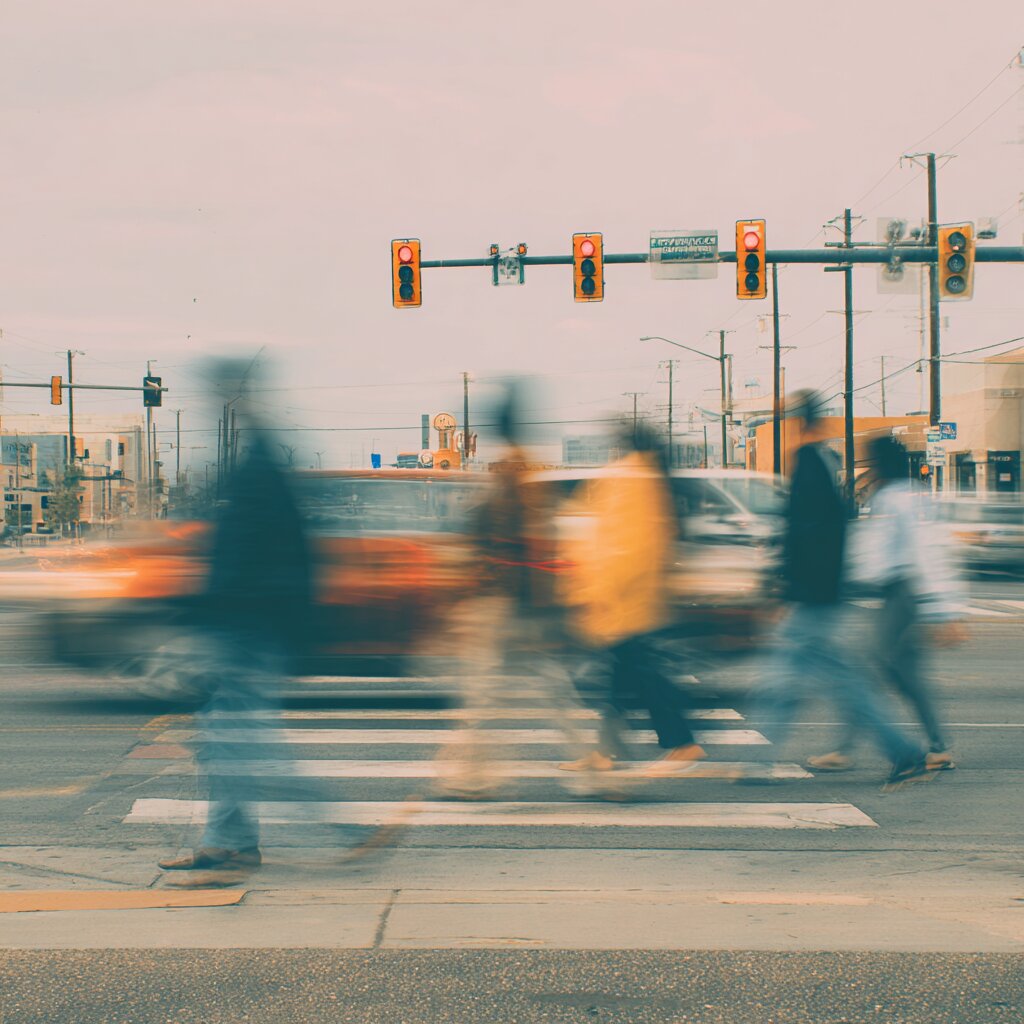
Texas law requires drivers to yield to pedestrians in crosswalks and exercise “due care” to avoid hitting you, even when you make mistakes. However, your rights change based on traffic signals, whether you’re crossing legally, and specific circumstances like jaywalking or walking without sidewalks.
Do Pedestrians Always Have the Right of Way in Texas?
No, pedestrians don’t always have the right of way in Texas. Your rights depend on where you’re crossing, traffic signals, and safety conditions.
Right of way means who legally gets to go first in traffic situations. Texas law protects pedestrians in specific situations but also requires you to follow traffic rules and use reasonable care for your own safety.
What Are Pedestrian Rights at Texas Crosswalks?
At crosswalks, Texas law gives you the right of way, but there are important rules both you and drivers must follow. A crosswalk is any marked area designated by painted lines at intersections or mid-block locations.
Your rights change depending on the type of crosswalk you’re using:
- Controlled crosswalks: These have traffic lights or “Walk/Don’t Walk” signals where you have the right of way when the signal shows it’s safe to cross.
- Uncontrolled crosswalks: These have no signals, and drivers must stop and yield when you’re in their half of the roadway or approaching from the opposite side.
Even with the right of way, you cannot suddenly step into traffic if a vehicle can’t safely stop. Drivers have specific duties when you’re crossing legally, including watching for pedestrians before turning at intersections and waiting until you safely reach the other side.
The key is that both parties have responsibilities—you must cross predictably, and drivers must yield appropriately.
Do Unmarked Crosswalks Give Pedestrians the Right of Way?
Unmarked crosswalks exist at most intersections in Texas, and you have rights there too. An unmarked crosswalk is the imaginary extension of sidewalks across intersections where two streets meet at approximately right angles.
Drivers must yield to you in unmarked crosswalks just like in marked ones. However, since these crossings aren’t painted, visibility is often worse and drivers may be less aware of your presence.
This rule surprises many people because they don’t realize these invisible crosswalks legally exist. The law treats them the same as painted crosswalks, giving you the same protection and requiring the same caution from drivers.
Who Goes First at Texas Intersections and Turns?
At intersections, right of way rules protect pedestrians crossing with the light or at stop signs. When you have a green light or “Walk” signal, you go first.
Here’s how it breaks down:
- Green light/Walk signal: You have the right of way to cross
- Turning vehicles: Must yield to you when you’re in the crosswalk
- Stop signs: You yield to vehicles already in the intersection, but drivers yield to you if you’re crossing legally
- No signals: Drivers must yield, but you need to be extra cautious
Turning vehicles cause many pedestrian accidents because drivers focus on other cars instead of watching for people crossing. Always try to make eye contact with drivers before stepping in front of turning vehicles, even when you have the right of way.
Is Jaywalking Illegal in Texas and Who Is at Fault?
Jaywalking is illegal in Texas when you cross between two adjacent signalized intersections, but the rules are more complex than most people think. You’re jaywalking when you cross mid-block between two intersections that both have traffic signals.
However, crossing mid-block is allowed when adjacent intersections don’t both have signals or at marked mid-block crosswalks. When crossing mid-block in a permitted location, you must still yield the right of way to all vehicles.
Here’s what this means for fault:
- Your duty: Yield to vehicles when crossing outside designated areas
- Driver’s duty: Still must exercise due care to avoid hitting you
- Shared fault: Texas’s 51% rule means you can still recover compensation if you’re 50% or less at fault
Even if you were jaywalking, drivers can’t just hit you. They still have a legal duty to try to avoid the collision if possible.
Where Must Pedestrians Walk if There Is No Sidewalk?
When no sidewalk exists, Texas law requires you to walk on the left side of the road, facing oncoming traffic. This rule comes from Texas Transportation Code § 552.006 and exists for your safety.
Walking facing traffic lets you see approaching vehicles and gives you time to react if a car swerves or gets too close. You should only walk on the right side when the left side is obstructed or unsafe.
The safety reasoning is simple, you can’t dodge what you can’t see coming. When you walk with traffic, cars approach from behind where you can’t see them until it’s too late to move.
What Did House Bill 1277 Change About Sidewalk Use?
House Bill 1277, effective September 2023, permits pedestrians to walk on the roadway when sidewalks are blocked or unsafe. This protects you from getting tickets when construction, damage, or obstacles make sidewalks unusable.
The practical impact is significant. Before this law, you could be cited for walking in the street even when the sidewalk was completely blocked. Now you have legal protection when circumstances force you into the roadway.
You must still walk facing traffic when using the roadway under this exception. The law doesn’t change safety requirements, just removes the penalty when you have no other choice.
What Rights Do Blind Pedestrians Have in Texas?
Texas law requires all drivers to stop completely and give right of way to blind pedestrians using a white cane or guide dog. This protection is absolute, no exceptions based on traffic signals or other right of way rules.
The white cane law creates the strongest pedestrian protection in Texas. When drivers see a white cane or guide dog, they must yield completely, regardless of any other traffic considerations.
Criminal penalties apply for violations, making this one of the few pedestrian laws with serious enforcement consequences. The law recognizes that blind pedestrians need extra protection because they can’t see approaching vehicles.
What Duties Do Drivers Owe to Pedestrians Under Texas Law?
Texas law requires drivers to exercise “due care” to avoid hitting pedestrians—even those breaking traffic rules. Due care means adjusting your driving for conditions like weather, visibility, and pedestrian behavior.
Drivers have specific legal duties:
- Exercise due care: Watch for pedestrians everywhere, not just crosswalks
- Yield at crosswalks: Both marked and unmarked intersections
- Stop before sidewalks: When exiting driveways or alleys
- Sound horn if necessary: To prevent collisions
- Extra caution for children: Or obviously confused or incapacitated persons
This “due care” standard means drivers can’t just follow traffic laws—they must actively watch for and avoid hitting pedestrians. Insurance companies often ignore this duty when trying to blame pedestrians for accidents.
The law recognizes that cars are deadly weapons that require constant vigilance from their operators.
Can I Recover Compensation if I Was Partly at Fault?
Yes, you can still recover compensation in Texas as long as you’re 50% or less at fault for the accident. This system is called modified comparative negligence, and it allows shared responsibility between parties.
Your compensation gets reduced by your percentage of fault. If you’re awarded $100,000 but found 30% at fault, you receive $70,000. However, if you’re 51% or more at fault, you get nothing.
Insurance companies know this rule and will try to push your fault percentage above 50% to avoid paying anything. They’ll argue you were distracted, crossing illegally, or should have been more careful.
This is why evidence matters so much in pedestrian cases. The difference between 49% and 51% fault can mean the difference between significant compensation and walking away empty-handed.
What Other Texas Pedestrian Laws Apply?
Texas cities can enact additional pedestrian protections, especially in high-traffic areas. These local laws often provide extra safety measures beyond state requirements.
Common local protections include:
- School zones: Enhanced penalties and lower speed limits during school hours
- Pedestrian-only zones: Downtown areas or special events where cars are restricted
- Hospital zones: Similar protections to school zones for medical facilities
- Solicitation restrictions: Safety rules preventing people from standing in roadways
These local ordinances recognize that certain areas need extra pedestrian protection. Violations often carry higher fines and more serious consequences than regular traffic tickets.
Check with your local city government to understand what additional protections might apply in your area.
What Should You Do After a Pedestrian Accident?
The moments after a pedestrian accident are critical for both your health and your legal claim. Your actions immediately affect your ability to recover compensation later.
As an experienced Lubbock pedestrian accident attorney, here’s exactly what I recommend to protect yourself:
Steps to Protect Your Claim After a Crash
- Call 911 immediately: Get medical help and ensure police create an official report.
- Document everything: Photograph the scene, vehicle, license plate, and your injuries if possible.
- Gather witness information: Names and phone numbers are crucial for your case.
- Preserve evidence: Don’t wash bloody clothes or throw away damaged items.
- Seek full medical evaluation: Some serious injuries aren’t immediately obvious.
- Avoid recorded statements: Tell insurance adjusters you need to speak with your attorney first.
- Contact Perrin Law PLLC Injury & Accident Lawyer immediately: The sooner I’m involved, the better I can protect your rights.
Never apologize or say “I’m sorry” after an accident. These statements can be twisted into admissions of fault later, even when you’re just being polite.
How Long Do You Have to File a Pedestrian Injury Claim in Texas?
In Texas, you generally have two years from the accident date to file a lawsuit, but don’t wait, evidence disappears and witnesses forget. This deadline is called the statute of limitations, and it’s absolute.
Missing this two-year window means losing your right to compensation forever. While rare exceptions exist for minors or undiscovered injuries, you can’t count on them.
Acting quickly matters because:
- Surveillance footage gets erased: Surveillance footage is often retained only for a short time before being overwritten or deleted.
- Skid marks fade: Weather and traffic quickly eliminate physical evidence
- Witnesses move or forget: Memory fades and people become harder to locate
At Perrin Law PLLC Injury & Accident Lawyer, I recommend starting the legal process within weeks of your accident, not months. Building a strong case takes time, and waiting until the deadline approaches leaves no room for proper preparation.
What Compensation Can You Recover After a Pedestrian Crash?
Texas law allows you to recover both economic and non-economic damages when a driver’s negligence causes your injuries. I fight to ensure my clients receive compensation that truly covers all their losses.
Medical Expenses and Future Care
Your recovery should cover all medical costs related to the accident:
- Current medical bills: Emergency room visits, hospital stays, and surgeries
- Future medical needs: Ongoing therapy, rehabilitation, and prescription medications
- Medical devices: Wheelchairs, prosthetics, and home modifications for disabilities
Don’t underestimate future medical costs, as handling medical bills after a car accident can be complex.
Lost Wages and Reduced Earning Capacity
You deserve compensation for income losses:
- Time missed from work: All wages lost during your recovery period
- Reduced ability to earn: Permanent disabilities that limit your career options
- Loss of benefits: Health insurance, retirement contributions, and advancement opportunities
This category often represents the largest portion of your damages, especially for younger victims with decades of earning potential ahead.
Pain, Suffering, and Disability
Texas law recognizes that some losses can’t be measured in dollars:
- Physical pain and emotional trauma: The ongoing suffering caused by your injuries
- Loss of enjoyment of life: Activities you can no longer participate in
- Permanent disabilities or disfigurement: Life-altering changes that affect your daily existence
These damages acknowledge that accidents cause more than just financial harm—they change your entire life experience.
Property Damage and Out-of-Pocket Costs
Don’t forget about smaller but real expenses:
- Damaged personal items: Phone, clothing, jewelry, or other belongings destroyed in the crash
- Transportation costs: Getting to medical appointments when you can’t drive
- Household help: Assistance with daily tasks during your recovery
These costs add up quickly and deserve compensation as part of your total recovery.
Experienced Pedestrian Accident Law Firm in Lubbock, Texas
I’m James Perrin, and I help pedestrian accident victims stand up to insurance companies. These companies know that blaming the pedestrian is often their easiest path to denying claims.
My trial-ready approach forces insurance companies to take your claim seriously because they know I’m prepared to fight in court if necessary. Unlike larger firms that shuffle clients between different attorneys, you work directly with me throughout your case.
You don’t pay me unless we win your case, that’s my commitment to you. This contingency fee structure means I only succeed when you do, aligning my interests with yours from day one.
The sooner we talk, the stronger your case becomes. Evidence disappears quickly, and insurance companies start building their defense immediately after an accident.
Texas Pedestrian Rights FAQs
Do School Zones Change Pedestrian Right of Way Rules?
School zones don’t change fundamental right of way rules, but they require reduced speeds and enhanced driver caution, with doubled fines for violations.
What if the Driver Left the Scene of a Hit-and-Run Pedestrian Crash?
I can help you pursue compensation through your uninsured motorist coverage while working with police to identify the hit-and-run driver.
How Do Personal Injury Claims Work for Injured Children?
Parents can file claims on behalf of injured children, and minors have until their 20th birthday to file their own lawsuit in Texas.
Do Pedestrian Rights Apply in Parking Lots and Private Property?
Yes, drivers must still exercise due care to avoid hitting pedestrians in parking lots and private property, though specific traffic laws may not apply.
Can a Driver Be Ticketed for Not Yielding to a Pedestrian in a Crosswalk?
Yes, failing to yield to pedestrians in crosswalks is a traffic violation that results in fines and points on the driver’s license.
Can Uninsured Motorist Coverage Help After a Pedestrian Crash?
Your auto insurance’s uninsured/underinsured motorist coverage protects you as a pedestrian if the at-fault driver lacks adequate insurance coverage.