
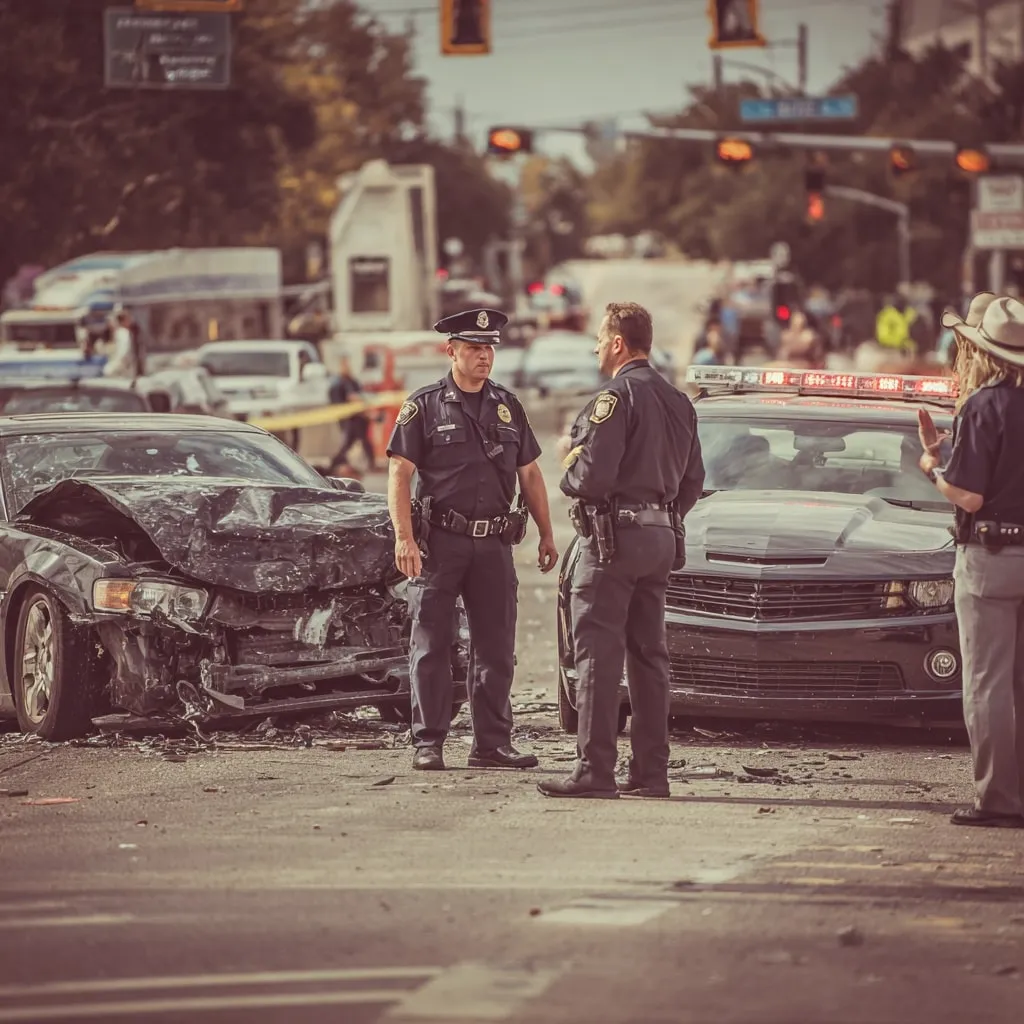
Texas law allows victims of car accident injuries caused by a drunk driver to sue that driver. Your civil lawsuit is entirely separate from any criminal charges the state files against the drunk driver.
Your civil claim seeks financial compensation for medical bills, lost wages, pain and suffering, and other damages. At the same time, the criminal case is the state’s prosecution to impose jail time or fines on the driver.
Texas law allows you to recover both standard damages and punitive damages in drunk driving cases because driving while intoxicated shows gross negligence.
You may also have claims against bars or restaurants that illegally overserved the drunk driver under Texas’s dram shop law, and you can pursue compensation even if the driver fled the scene or lacks insurance through your own coverage and state victim programs.
What Is the Difference Between the Criminal Case and My Civil Claim?
A criminal case is the state’s prosecution of a drunk driver to impose jail time, fines, or probation. Your civil claim is your lawsuit against the driver to get monetary compensation for your injuries and losses. These two cases run on separate tracks and have different rules.
The criminal case requires proof beyond a reasonable doubt, which is a very high standard. Your civil case only needs proof by preponderance of the evidence, which means it’s more likely than not that the driver caused your injuries. This lower standard makes it easier for you to win your civil case.
| Aspect | Criminal DWI Case | Your Civil Injury Claim |
| Who files | The State of Texas | You (the victim) |
| Purpose | Punish the driver | Compensate your losses |
| Burden of proof | Beyond reasonable doubt | More likely than not |
| Outcome | Jail, fines, probation | Money damages for you |
Do I Need a Criminal Conviction to Win My Injury Case?
You don’t need a criminal conviction to win your civil case against a drunk driver. The criminal case and your civil case have different standards of proof, so even if the driver beats the criminal charges, you can still win your civil lawsuit.
A criminal conviction definitely helps your civil case because it proves the driver was intoxicated. However, criminal charges can be dropped for technical reasons that don’t affect your right to compensation.
What Damages Can I Recover After a Drunk Driving Crash?
Under Texas law, you can get money for all the damage the drunk driver caused. If you drive drunk, you are being very careless and not caring about safety, so that you may get more money than in a typical car accident.
You can recover three main types of damages: economic damages, non-economic damages, and punitive damages. Each category addresses a different aspect of how the crash affected your life.
What Economic and Non-Economic Damages Are Available?
Economic damages are your measurable financial losses from the crash. These include all the money you’ve spent or lost because of your injuries.
- Medical expenses: Emergency room bills, surgery costs, physical therapy, prescription medications, and future medical treatment.
- Lost wages: The income you missed while recovering from your injuries.
- Lost earning capacity: If your injuries prevent you from returning to your old job or earning the same income.
- Property damage: Repairs or replacement of your vehicle and other damaged belongings.
Non-economic damages compensate you for the personal, non-financial ways the crash harmed you. These damages recognize that some injuries can’t be measured in dollars but still deserve compensation.
- Pain and suffering: The physical pain from your injuries and medical treatment.
- Mental anguish: Anxiety, depression, PTSD, or other emotional trauma from the crash.
- Disfigurement: Permanent scars or physical changes from your injuries.
- Loss of enjoyment of life: Activities you can no longer do because of your injuries.
Can I Get Punitive Damages in a Texas Drunk Driving Case?
In Texas, victims of drunk driving accidents can often seek punitive damages, which are intended to punish the driver for their reckless behavior rather than just cover their bills.
To secure these damages, our Texas drunk driver accident lawyers must demonstrate “gross negligence,” which means proving the driver was aware that their intoxication created an extreme risk of harm but chose to get behind the wheel anyway.
Factors such as a blood alcohol level over 0.15%, a history of prior DWI convictions, or fleeing the scene after the crash significantly strengthen this claim. While Texas law does place caps on these awards, the limits are high enough to provide substantial additional recovery for the harm you suffered.
If you believe your accident involved extreme recklessness, contact us today to discuss your rights.
Can I Sue a Social Host in Texas?
Texas generally doesn’t hold social hosts liable for serving adult guests at private parties. However, there’s one major exception: serving alcohol to minors.
Under Texas law, adults who knowingly provide alcohol to anyone under 21 can be sued if that minor causes a drunk driving crash. This doesn’t apply to parents serving their own children in their home, but it covers house parties, graduation parties, or any social gathering where adults provide alcohol to underage guests.
Social host liability requires proving the host knew or should have known the person was under 21 and that providing alcohol was illegal.
Who Else Can Be Liable Besides the Driver?
Multiple parties can share responsibility for drunk driving crashes. Identifying all liable parties maximizes your compensation options, especially when the drunk driver has insufficient insurance.
Beyond the driver and bars, other potentially liable parties include vehicle owners who negligently entrusted their car to the drunk driver, employers if the driver was working, and even rental car companies in specific circumstances.
Can I Sue the Vehicle Owner for Negligent Entrustment?
Yes, you can sue vehicle owners under negligent entrustment if they lent their car to someone they knew or should have known was dangerous. Negligent entrustment occurs when you give your vehicle to someone who poses an unreasonable risk to others.
Vehicle owners can be liable if they knew about:
- Previous DWI convictions or suspended license.
- Current intoxication or drug use.
- History of reckless or dangerous driving.
- Plans to drink and drive.
Common negligent entrustment scenarios include parents lending cars to adult children with DWI histories, friends handing over keys after watching someone drink heavily, or employers allowing employees with known alcohol problems to drive company vehicles.
Proving the owner’s knowledge is crucial. Prior incidents, witnessing drinking, or apparent signs of intoxication all help establish that the owner should have known better than to allow that person to drive.
What If the Drunk Driver Fled or Has No Insurance?
Hit-and-run drunk driving crashes create additional challenges, but you still have options for compensation. Many drunk drivers flee because they know they’re intoxicated and face serious criminal charges.
Even when the driver disappears or lacks insurance, Texas provides multiple paths to recovery. Your insurance coverage and state programs can help cover your losses while our legal team at Perrin Law Accident & Injury Lawyer work to locate the fleeing driver.
Can UM/UIM or the Crime Victims’ Fund Help Cover My Losses?
Your Uninsured/Underinsured Motorist (UM/UIM) coverage is your first line of defense. This is part of your own auto insurance policy that covers you when at-fault drivers can’t pay for your damages.
UM/UIM coverage applies whether the driver is completely uninsured, underinsured, or unidentified in hit-and-run cases. Your insurance company cannot raise your rates for using this coverage after a not-at-fault accident.
You can pursue both UM/UIM claims and Crime Victims’ Compensation simultaneously. These programs provide crucial support when the at-fault driver cannot pay.
How Does My Fault Percentage Affect a DWI Injury Claim?
Texas follows a modified comparative negligence rule that reduces your compensation based on your percentage of fault. You may recover damages as long as you are 50% or less at fault for the accident.
Under Texas’s modified comparative negligence laws, if you are found 51% or more responsible, you recover nothing. If you’re partially at fault, your total award is reduced by your percentage of fault. For example, if you have $100,000 in damages but are 30% at fault, you’d recover $70,000.
However, juries rarely assign significant fault to drunk driving victims. The drunk driver’s extreme negligence typically overshadows minor contributing factors like slight speeding or momentary inattention.
Factors that might contribute to victim fault include not wearing a seatbelt, minor traffic violations, or distracted driving. Even these factors rarely prevent substantial recovery because drunk driving is such egregious conduct.
Does Criminal Restitution Impact My Civil Recovery?
The drunk driver’s sentence includes criminal restitution, which is money that the criminal court orders them to pay you. This is not part of your civil lawsuit, but it does count toward your total recovery, so you don’t have to pay twice.
Criminal restitution usually pays for things like medical bills and lost wages that you have to pay for yourself. But it doesn’t often cover future medical needs, pain and suffering, or full compensation for your losses.
Restitution orders help your civil case by making it clear who is to blame for the drunk driving. But it can be hard to collect if the driver goes to jail or doesn’t have any money. You shouldn’t wait for criminal restitution. You should file your civil claim right away to protect evidence and meet deadlines.
What Deadlines Apply to DWI Injury and Dram Shop Claims?
Texas has a strict statute of limitations for car accidents that you cannot miss:
- Personal injury claims against drunk drivers: File promptly to comply with the applicable statute of limitations.
- Dram shop claims against bars: Dram shop claims against bars have a two-year statute of limitations, but evidence preservation must begin immediately.
- Crime Victims’ Compensation applications: Three years from the crime.
These deadlines are absolute. Miss them, and you lose your right to compensation forever, regardless of how strong your case might be.
Evidence in car accident claims disappears much faster than legal deadlines. Surveillance footage can be overwritten, witness memories fade, and physical evidence can be destroyed. This is why you need to act immediately after a drunk driving crash.
What Steps Should I Take Right After a Drunk Driving Crash?
Seek medical attention immediately, as adrenaline can mask severe internal trauma. Call 911 and inform the operator if you suspect the other driver is intoxicated so the police can perform sobriety tests. If it is safe to do so, take photos of vehicle damage, your injuries, and the surrounding area.
Collect contact information from witnesses and take note of specific signs of intoxication, such as slurred speech or the smell of alcohol.
Critical Actions Within 48 Hours
Follow up with your primary doctor to begin a formal medical record of your injuries. Report the accident to your own insurance provider using only basic facts, but avoid giving a recorded statement.
Contact us as soon as possible to ensure evidence is preserved and your rights are protected before you speak with the other driver’s insurance company.
Mistakes to Avoid Following the Crash
Avoid posting any details or photos of the accident on social media, as insurance adjusters often monitor these platforms to devalue claims. Do not sign any documents or accept quick settlement offers before you fully understand the long-term impact of your injuries.
Most importantly, do not provide recorded statements to the at-fault driver’s insurance company without first consulting a lawyer.
Why Hire Perrin Law PLLC Injury & Accident Lawyer Now?
Drunk driving cases require immediate action and experienced representation. I help hold negligent drivers and establishments accountable for their actions.
As an experienced auto accident attorney, I take a trial-ready approach that forces insurance companies to take your claim seriously. When insurers know I’m prepared to go to court, they offer better settlements to avoid the risk of a large jury verdict.
Here’s what sets my practice apart:
- Immediate evidence preservation: I promptly send preservation letters to bars and restaurants.
- Comprehensive investigation: I work with accident reconstruction experts, toxicologists, and other specialists.
- Personal attention: You work directly with me, not paralegals or assistants.
- No upfront costs: You pay nothing unless I win your case.
- Trial experience: Over two decades of taking cases to verdict when necessary.
I coordinate with criminal prosecutors as I build your civil case, ensuring no opportunity for compensation is missed. My goal is to secure full compensation for all your damages while you focus on healing.
Injured by a Drunk Driver? Get Legal Help Today
Being hit by a drunk driver turns your life upside down instantly. You’re dealing with injuries, medical bills, lost wages, and the trauma of someone else’s reckless decision to drive while intoxicated.
You don’t have to face this alone. As your attorney, I’m here to handle the legal complexities while you focus on your recovery. Both for justice and to stop more tragedies from happening, drunk drivers and the places that serve them too much alcohol need to be held responsible.
Your consultation is free, and you pay nothing unless I win your case. I’m available 24/7 because drunk driving crashes don’t follow business hours. Contact me today for your free consultation and let me fight for the justice and compensation you deserve.
Frequently Asked Questions
Will the At-Fault Driver’s Insurance Cover Punitive Damages in Texas?
Most insurance policies exclude coverage for punitive damages, so we typically pursue them directly from the drunk driver’s personal assets. However, we also negotiate with insurers who sometimes pay to avoid the risk of a significant punitive damages award.
Should I Give a Recorded Statement to Insurance After a DWI Crash?
No, you should politely decline recorded statements until you have legal representation. Insurance adjusters use these statements to find ways to minimize or deny your claim, even in clear drunk driving cases.
Can a Passenger Sue Both the Drunk Driver and the Bar?
Yes, passengers can file claims against the drunk driver and any establishment that illegally overserved them. Passengers typically have strong cases since they bear no fault for the crash.
Can I Still Recover if I Got in the Car Knowing the Driver Was Drinking?
Your recovery might be reduced under Texas’s comparative fault rules even if you’re blamed for an accident that wasn’t your fault, but it’s not automatically barred. The drunk driver still bears primary responsibility for choosing to drive while intoxicated.